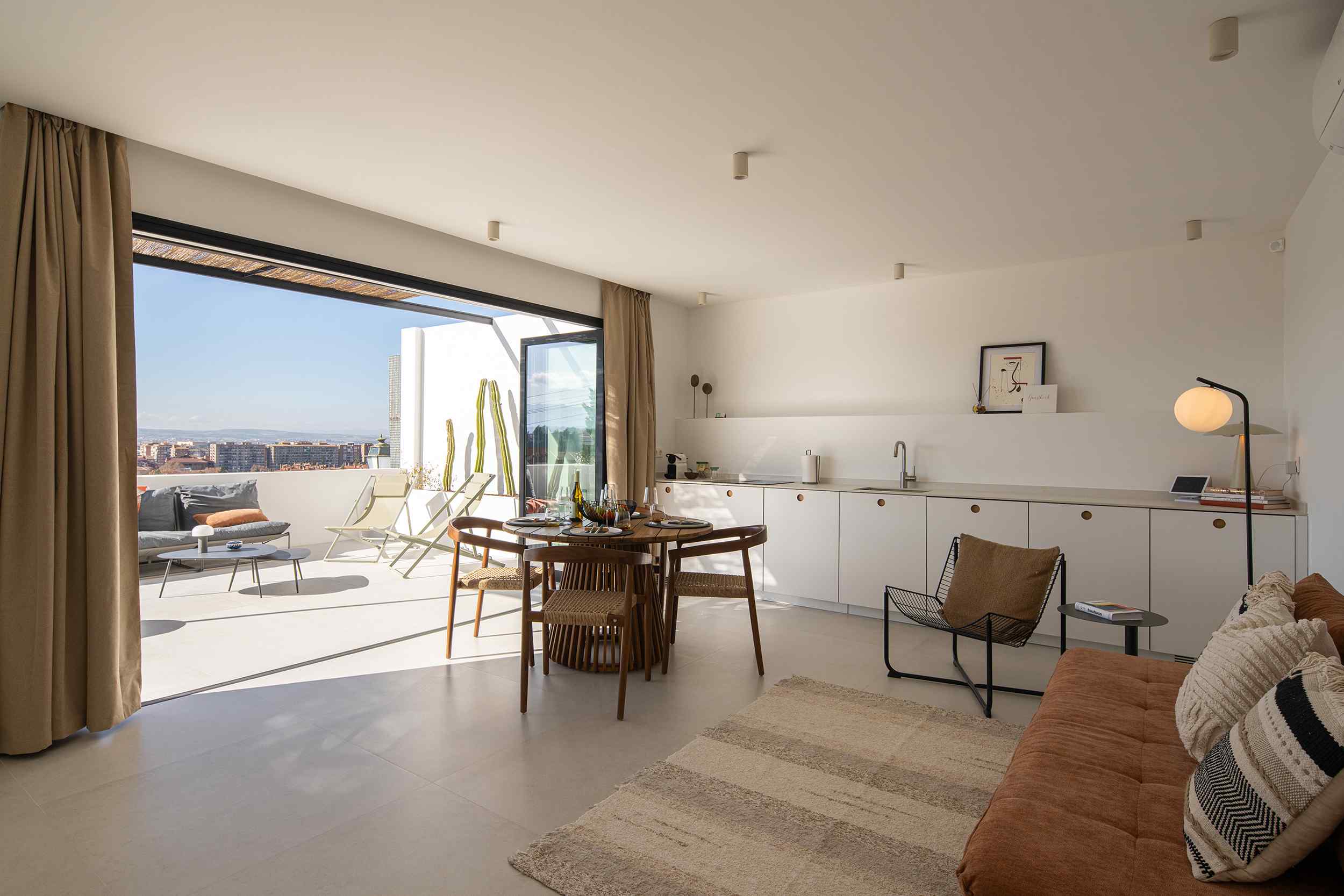
 Overview
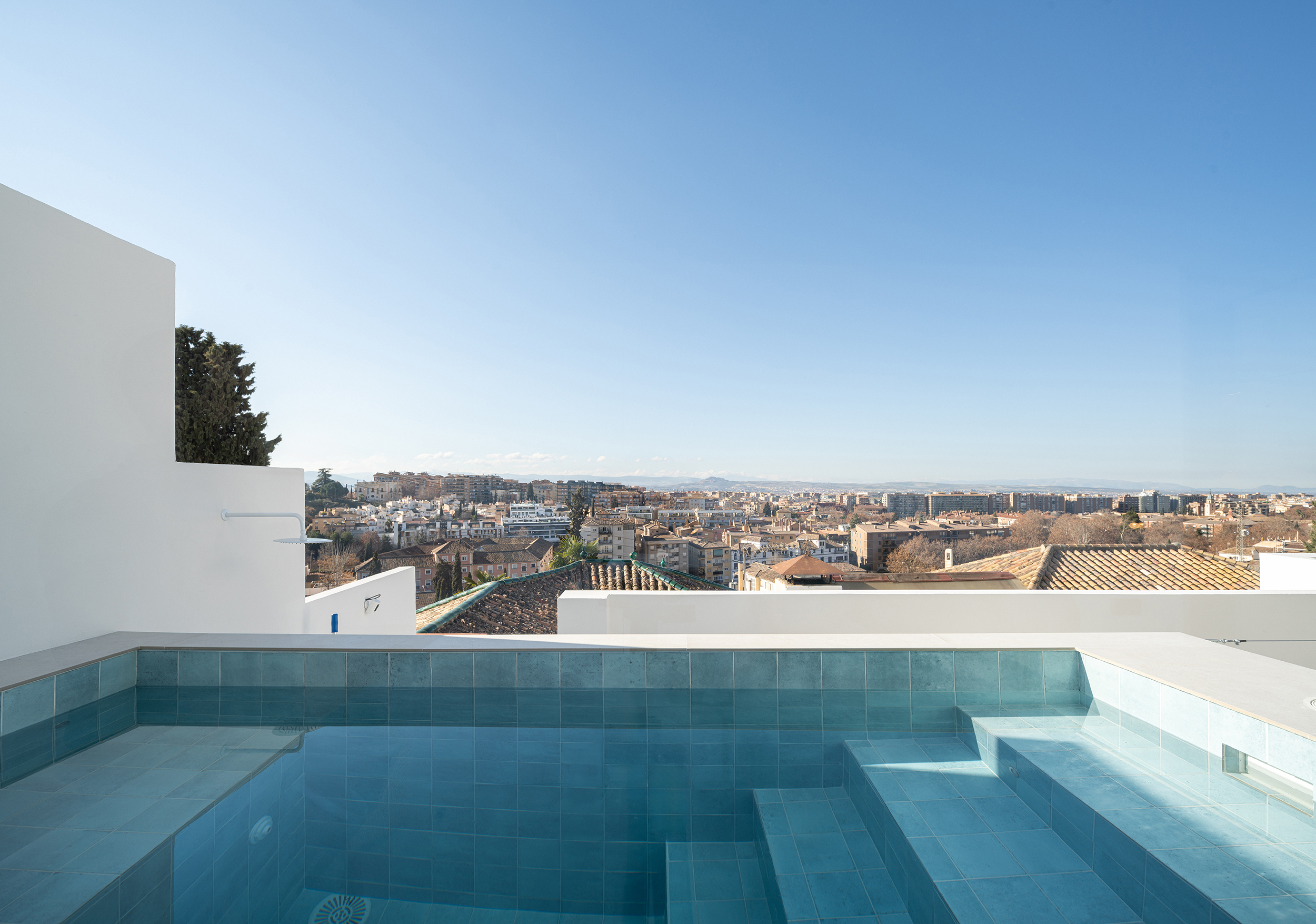 Private Pool & Parking
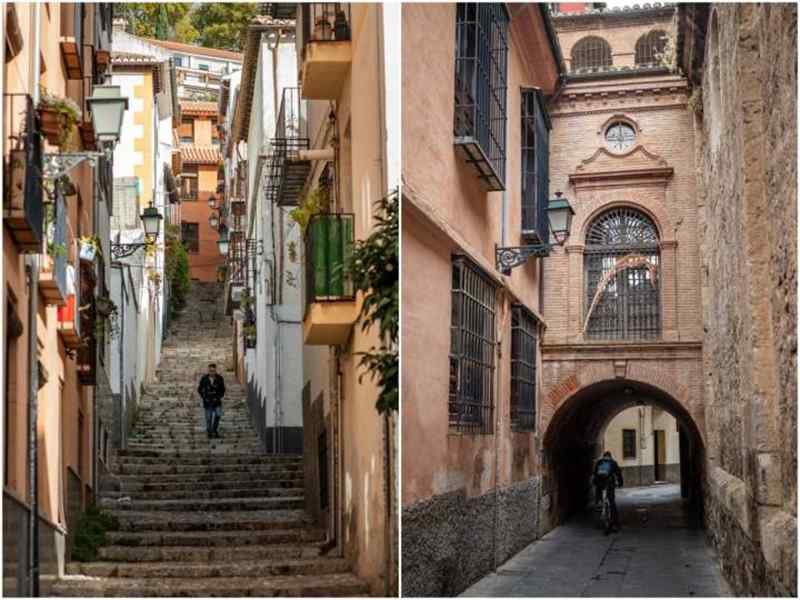 Location — Realejo
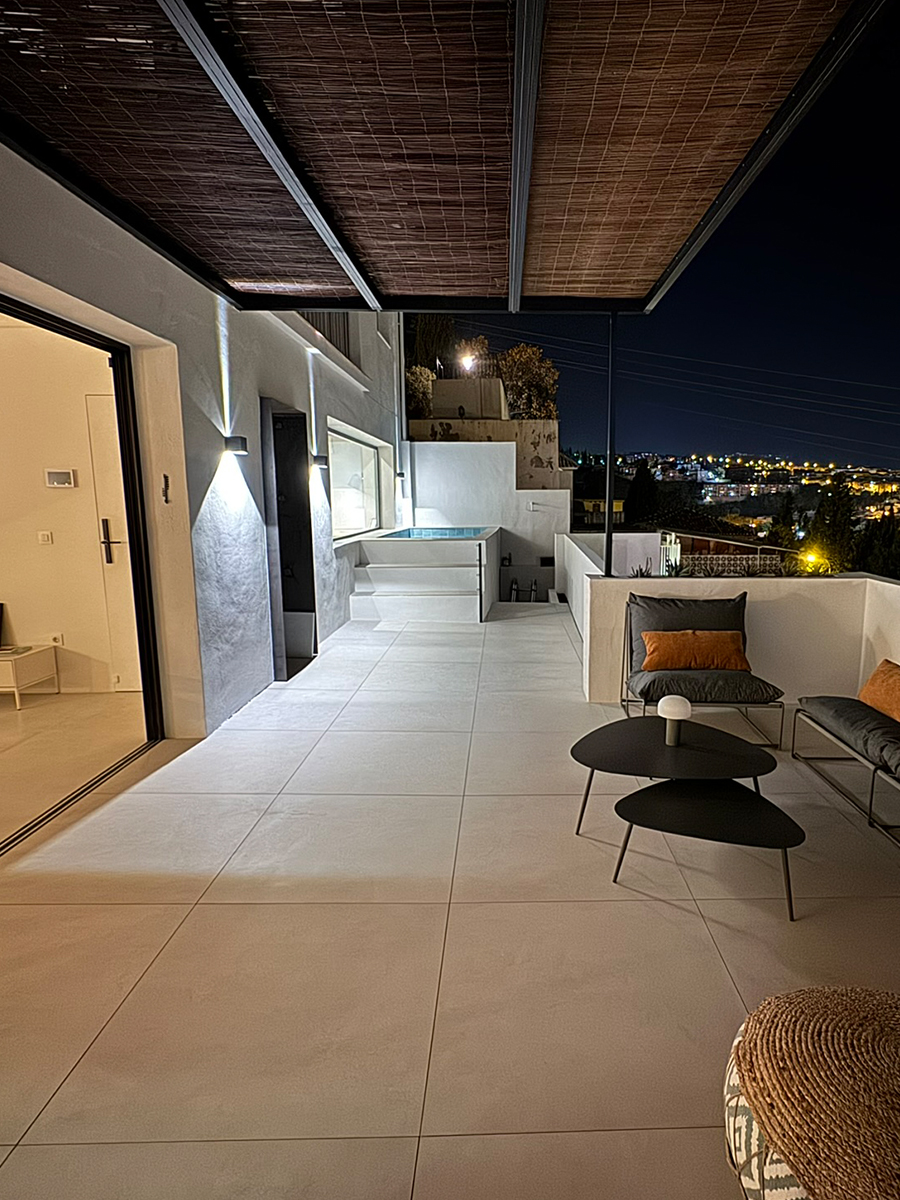 Contact the Owners
 Alhambra
 Neighbourhoods
 Alpujarras Villages
 Towns Near Granada
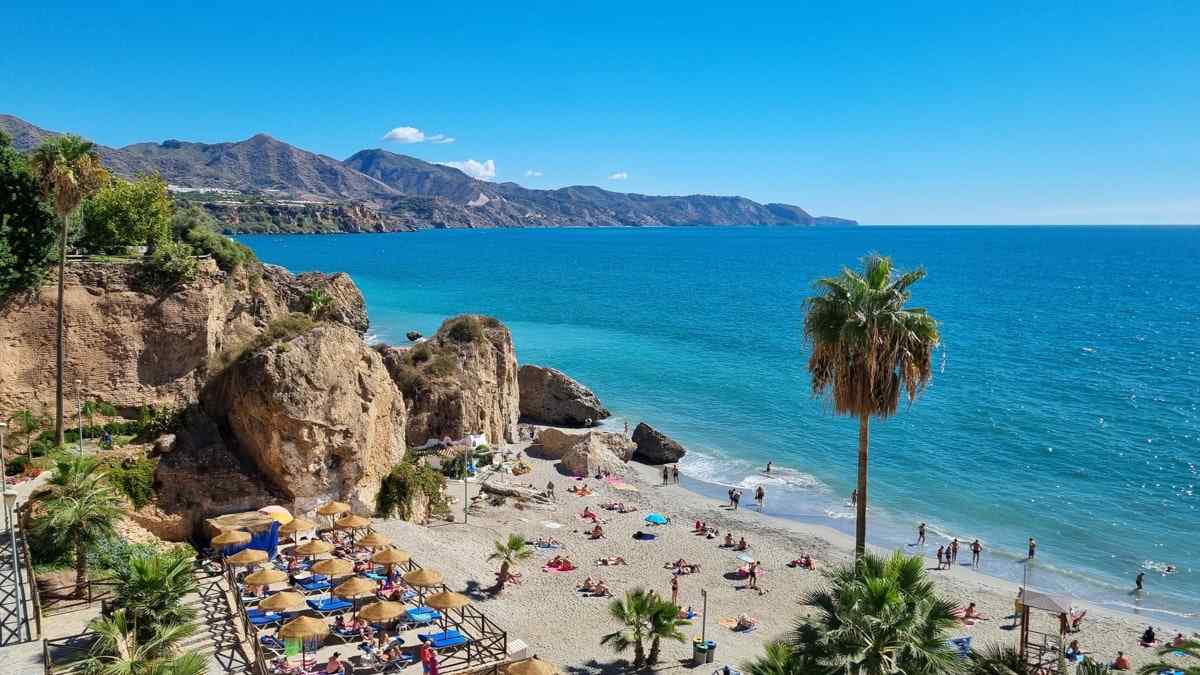 Costa Tropical
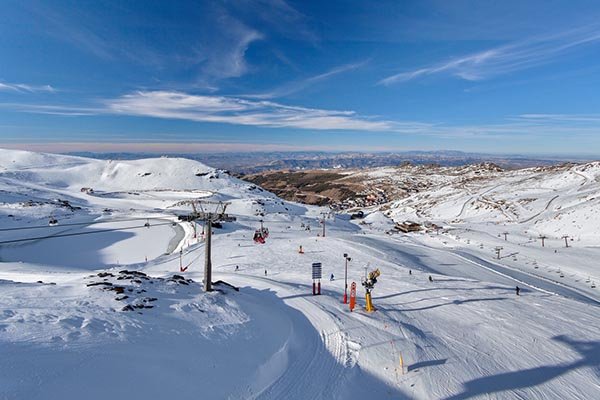 Sierra Nevada
 Terraza 6
What Is Cruces de Mayo Granada 2026?
Cruces de Mayo Granada 2026 takes over the city from Friday 1 May to Sunday 3 May. For three days, neighbourhood associations, bars, and cultural groups build elaborate crosses out of fresh flowers and set them up in plazas, patios, and quiet corners across town. People drink cold beer next to them. Sevillanas play from speakers strung between balconies. Women in flamenca dresses pose for photos. Judges walk between them with clipboards.
It is, honestly, the most fun three days of the Granada calendar. Semana Santa is heavier and more solemn. Corpus Christi is bigger but more touristy. Cruces de Mayo, also called Día de la Cruz, is the city at its most relaxed and most local. Free to attend, outdoors, and built around the simple pleasure of standing in a plaza with a drink in your hand.
This guide walks you through what the festival actually is, where the best crosses are (with a focus on the neighbourhoods worth your time), what to eat, what to drink, what to wear, and how to time your visit so you see the festival at its best.
The Tradition Behind the Festival
The Granada celebration goes back to 1754, which makes it one of the oldest Cruces de Mayo traditions in Spain. It blends two things: the Christian feast of the Holy Cross on 3 May and much older Iberian spring rites that mark the end of winter and the start of the planting season. Both ideas survived together, and the result is a festival that feels religious in form but pagan in spirit.
The Spanish state recognises it as a Fiesta de Interés Turístico Nacional — a Festival of National Tourist Interest. That sounds bureaucratic, but in practice it means the city, the regional government, and a long list of neighbourhood associations all coordinate to make the three days happen properly.
Granada is not the only city that does this. Córdoba's Cruces are arguably more famous and lead straight into the Patios festival a week later. But Granada's version has its own character: quieter than Córdoba, more intimate, and shaped by the geography of the old quarters that climb the hills around the centre.
How a Cross Is Built
A typical cross starts as a wooden frame — usually two to three metres tall — that the building team covers with thousands of fresh flowers. Carnations are the classic choice because they hold up in the heat. Then the decoration begins. Embroidered shawls drape from the arms. Mirrors and silver objects sit at the base. Moorish tiles, ceramic plates, copper pots, and an old Singer sewing machine often appear somewhere in the arrangement. The whole thing usually takes the team a week of evenings to put together, plus weeks of collecting flowers and props before that.
One detail you will notice: an apple with a pair of scissors stuck in it, placed somewhere on most crosses. The tradition says it wards off criticism. Spectators are supposed to admire the cross without saying "pero" — the Spanish word for "but." If you say it, you owe a drink.
Cruces de Mayo Granada 2026: Dates and Key Facts
Staying in Granada?
A private base with a pool and panoramic terrace
- Private pool and terrace
- No shared spaces
- A location that works well for exploring the city on foot
The festival runs across the long weekend from Friday 1 May to Sunday 3 May 2026. The 1st of May is Labour Day in Spain, which is a national public holiday, so the city is on full holiday mode from Friday morning. Most shops close. Most people are out. The crosses go up on Friday afternoon and stay until Sunday night.
Here are the headline facts to plan around:
- Cost: Free to visit every cross. You only pay for what you eat and drink.
- Best evenings: Friday 1 May and Sunday 3 May are the busiest. Saturday is calmer if you prefer fewer crowds.
- Best hours: Late afternoon to midnight. The crosses are illuminated after dark and look entirely different from how they do in daylight.
- Awards: The judging panel tours all the crosses across the three days. Winners are announced publicly on Sunday evening.
- Weather: Granada in early May usually runs 22–26°C in the day and 11–14°C at night. Bring a light jacket for the late evenings.
If you can only come for one day, make it Friday 1 May. The opening day energy is hard to beat, and you have the public holiday on your side to start drinking at lunchtime without guilt.
Where to See the Best Crosses
The full list of registered crosses runs into the dozens. Here are the ones worth structuring your evening around, broken down by neighbourhood.
City Centre Crosses
Plaza de Bib-Rambla is where the grandest cross usually goes up. It is almost always among the prize-winners. The plaza already has flower stalls year-round, so the cross sits in a square that is built for the occasion. Expect crowds, but expect a good cross.
Plaza de la Trinidad, just west of the cathedral, hosts a livelier student-flavoured cross with a properly festive bar atmosphere. The crowd skews younger here. The drinks come faster. If you want noise and dancing, this is the better choice over Bib-Rambla after about 9 PM.
Paseo del Salón and Carrera del Genil get a string of smaller crosses along the riverside promenade. These are quieter, made for an early-evening stroll between dinners. Worth a walk if you are coming from or heading toward the southern part of the centre.
Albaicín and Sacromonte Crosses
Plaza de San Miguel Bajo in the upper Albaicín sits in front of a small white church, surrounded by ancient stone walls and a few rough-and-ready bars. The cross here always feels neighbourhood-first. Less polished than Bib-Rambla, more atmospheric. The walk up is steep but the reward is real.
Cuesta del Chapiz connects the Albaicín to Sacromonte and gets an intimate cross with views back over the city. It tends to attract a more local crowd. If you want to see how the festival looks without the tourist layer, walk this route.
Heading further into Sacromonte, you will find smaller community crosses set up outside cave-houses and around the small plazas. None of these will win the city prize, but together they are arguably the most charming part of the festival to wander through.
Realejo Crosses
The Realejo — the old Jewish quarter on the southern slope below the Alhambra — is one of the festival's true heartlands. The neighbourhood has a strong cross-building tradition and the streets between the plazas are decorated with bunting, paper flowers, and strings of lights for the whole weekend.
Campo del Príncipe is the Realejo's main square and the host of one of the most beloved crosses in the city. The square fills with outdoor seating, music, food stalls, and a crowd that swings between local families in the afternoon and a younger drinking crowd after dark. The cross itself is usually a serious contender for the top prize.
Plaza de los Campos is the smaller Realejo cross — a quieter, more neighbourhood-driven affair just a few minutes from Campo del Príncipe. Worth dropping into between bigger stops.
Beyond the two main plazas, walk Calle Molinos and Calle Horno de Oro slowly. You will find painted patios open to the public, bars that have spilled out into the street, and small altars set into doorways. The whole neighbourhood becomes the venue.
What to Eat and Drink at the Cruces
The food and drink around the crosses is part of the point. Each cross is surrounded by a temporary bar — sometimes a proper open-sided tent, sometimes just a folding table and an awning — run by the association that built the cross. The money raised funds next year's flowers.
You will find the same short menu almost everywhere:
- Cañas: small glasses of cold draft beer. The standard order. Usually €2–€3.
- Rebujito: manzanilla or fino sherry mixed with lemonade or Sprite, served in a tall glass over ice. The festival drink. Easy to drink, dangerous in volume.
- Tinto de verano: red wine and lemon soda. The wine version of rebujito.
- Tapas: a free tapa with every drink, in proper Granada tradition. Expect simple things — patatas bravas, a small plate of jamón, a slice of tortilla. Nothing fancy. That is the point.
For a bigger meal, leave the cross and find a proper restaurant. The bars around Campo del Príncipe stay open and serve full menus throughout the weekend. For a deeper look at the city's food scene, the guide to Granada tapas and traditional dishes covers what to order and where.
Honestly, the best strategy is to eat lunch properly somewhere indoors, then graze on free tapas at the crosses for the rest of the day. Three crosses, three drinks, three free plates of food. By midnight you will not need dinner.
What to Wear and What to Expect
There is no required dress code, but Cruces de Mayo is one of the few times of year you will see locals — especially women — wearing the traje de flamenca (also called traje de gitana): the ruffled, polka-dotted, brightly coloured dress most people associate with Andalusian festivals. Men sometimes wear a smarter version of country dress: dark trousers, a white shirt, a wide-brimmed Cordoban hat.
Visitors are welcome to join in. Several rental shops in the city centre hire flamenca dresses for the weekend, with prices roughly €30–€60 depending on the dress. If you want to do this, book in advance — stock runs out by mid-April most years. If costume is not your style, just dress comfortably. Closed shoes matter more than anything else. The streets in the Albaicín and Realejo are cobbled and uneven, and you will be walking for hours.
Other things to know:
- It gets loud. Music plays at every cross from late afternoon onwards. If you are noise-sensitive, plan an earlier visit.
- It is family-friendly. Children are everywhere until at least 10 PM. The festival is built for all ages.
- Spanish dominates. A few crosses near tourist areas have English-speaking staff. Most do not. Basic Spanish goes a long way.
- Cash helps. Many cross-bars take card now, but some still don't. Carry €20–€40 in small notes.
How to Plan Your Three Days
Three full days of cross-hopping sounds like a lot, but the festival rewards a slow approach. Here is one way to break it up.
Friday 1 May: Opening Day in the Centre
Start with a late lunch around 2 PM — most restaurants are full but cheerful. Walk to Plaza de Bib-Rambla by 5 PM to see the headline cross before the heaviest crowds arrive. Drift through Plaza de la Trinidad, then walk down to Carrera del Genil. End the evening at Campo del Príncipe in the Realejo — the cross there hits its peak after 10 PM.
Saturday 2 May: The Albaicín Climb
Use Saturday for the upper neighbourhoods. Start in the early evening with a slow walk up through the Albaicín, hitting Plaza de San Miguel Bajo first. Continue along Cuesta del Chapiz toward Sacromonte, stopping at smaller community crosses on the way. Time your arrival at the Mirador de San Nicolás for sunset. The view of the Alhambra at golden hour, with festival noise drifting up from below, is one of the better moments of the year in Granada.
Sunday 3 May: Award Day in the Realejo
Sunday is judging day. Spend the morning recovering. In the afternoon, walk the Realejo properly — Plaza de los Campos, Calle Molinos, Calle Horno de Oro, then back to Campo del Príncipe for the evening. The award announcement happens around 8–9 PM. Whatever cross wins, the celebration around it lasts until well past midnight.
Combining the Festival With the Rest of Granada
If you are in the city for Cruces de Mayo, you almost certainly want to do other things too. The festival is mostly evenings, which leaves the daytimes wide open.
Three suggestions for daytime use:
- Visit the Alhambra in the morning. Book the earliest available slot — ideally before 10 AM. You will need Alhambra tickets in advance. Festival weekends sell out faster than usual.
- Take a half-day to the mountains. The Sierra Nevada is still snow-capped in early May. A short drive up gives you a complete change of scene before you head back into the festival heat.
- Day-trip to the white villages. The Alpujarras are at their best in May — wildflowers everywhere, comfortable temperatures, and small villages largely untouched by festival traffic.
What you should not try to do is squeeze a beach trip into a Cruces weekend. The A-44 to the coast gets busy with locals heading the same direction, and you will lose half a day to driving. Save that for a normal weekend.
Practical Tips for Photographers
Cruces de Mayo is one of the most photogenic weekends in Granada, and you will see plenty of cameras around. A few things that help:
- Golden hour falls between 7 and 9 PM in early May. This is when the crosses look best — warm light hitting the carnations, lower contrast on the embroidered shawls.
- After sunset, the lights take over. Most crosses are illuminated with strings of bulbs that warm up beautifully against the night sky. Use a wide aperture if you have one. A tripod is rarely practical because of the crowds.
- Ask before photographing people. Children dressed in flamenca outfits are everywhere and obviously photogenic, but always ask the parents first. Spanish is appreciated; a smile is enough if your Spanish is shaky.
- The empty morning shots are underrated. Walk past the same crosses at 9 AM the next day. The flowers are still fresh, the bunting is in place, and the streets are empty. Some of the best photos happen then.
Practical Information
Dates 2026Friday 1 May to Sunday 3 May (1 May is a public holiday in Spain) CostFree to visit every cross. Drinks and tapas are paid (€2–€4 per drink, free tapa with each). Best hoursLate afternoon (5 PM) until midnight. Lights come on around 9 PM. Busiest periodsFriday evening from 8 PM and Sunday late afternoon for the awards. Quietest periodSaturday afternoon — good for relaxed cross-visits with kids. Getting aroundWalk. Almost every cross sits within 1.5 km of the cathedral. Taxis disappear after 10 PM. What to wearComfortable closed shoes. Light layers — warm afternoons, cooler late evenings. Costume hireSeveral centre shops rent flamenca dresses for €30–€60. Book by mid-April. CashBring €20–€40 in small notes. Many cross-bars take card now, but some still don't. PhotographyGolden hour 7–9 PM; illumination from around 9 PM. Ask before shooting people. LanguageSpanish dominates. Basic phrases are appreciated.
Frequently Asked Questions
When is Cruces de Mayo Granada 2026?
Cruces de Mayo Granada 2026 runs from Friday 1 May to Sunday 3 May. The festival aligns with the Christian feast of the Holy Cross on 3 May, with crosses going up across the city's plazas from Friday afternoon and the award ceremony taking place on Sunday evening. The 1st of May is also Labour Day in Spain, so the city is on full holiday mode for the entire weekend.
Do I need tickets for Cruces de Mayo?
No. The festival is entirely free. You can walk between every cross in the city without paying for anything except your drinks and food. There is no entry fee, no booking required, and no organised route — you simply wander.
Where is the best cross in Granada?
The most consistently impressive cross is in Plaza de Bib-Rambla in the city centre. It usually wins or places highly in the official judging. That said, the best cross to actually spend an evening at is in Campo del Príncipe in the Realejo neighbourhood — it has the food, the music, and the atmosphere that makes the festival what it is. For something quieter and more local, head up to Plaza de San Miguel Bajo in the Albaicín.
What does Cruces de Mayo mean?
Cruces de Mayo translates to "Crosses of May," a festival also known in Spanish as Día de la Cruz (Day of the Cross). It marks the Christian feast of the Holy Cross on 3 May, but the celebration mixes religious tradition with much older Iberian spring festivals. In Granada, the tradition has been recorded since 1754 and is officially recognised as a Festival of National Tourist Interest.
Is Granada too crowded during Cruces de Mayo?
Granada gets busy, but it doesn't feel overwhelmed the way it does during Semana Santa or peak summer. The crowds spread across dozens of plazas instead of concentrating on a few main streets. Friday evening and Sunday late afternoon are the busiest moments. If you want a quieter experience, build your day around Saturday afternoon and the upper Albaicín crosses.
What should I wear to Cruces de Mayo?
Comfortable closed shoes are non-negotiable — you will be walking for hours over cobbled streets. Beyond that, light layers work best. Days are warm (22–26°C), evenings cool down to around 13°C. If you want to dress up, the traditional traje de flamenca is welcomed and worn by many local women. Several shops in the centre rent dresses for the weekend at €30–€60. Book by mid-April.
What other festivals happen in Granada in spring?
Cruces de Mayo is part of Granada's spring festival trilogy. Semana Santa (Holy Week) comes first, in late March or April depending on the year. Cruces de Mayo follows on 1–3 May. Then Corpus Christi — the city's biggest festival of the year, with a full fairground at the Almanjáyar fairgrounds — falls in late May or early June. If you are planning a spring visit, any of the three is worth structuring your trip around.
Staying Nearby: Terraza 6
Where you stay during Cruces de Mayo matters more than during a regular weekend. The festival runs across three full days and late into each night, so you want a base you can walk back to easily — and somewhere comfortable enough to genuinely rest in between cross-visits. Terraza 6 sits in the Realejo at Calle Villar Yebra 6, about a five-minute walk from Campo del Príncipe — the heart of the neighbourhood's festival. You are inside the festival, not commuting to it.
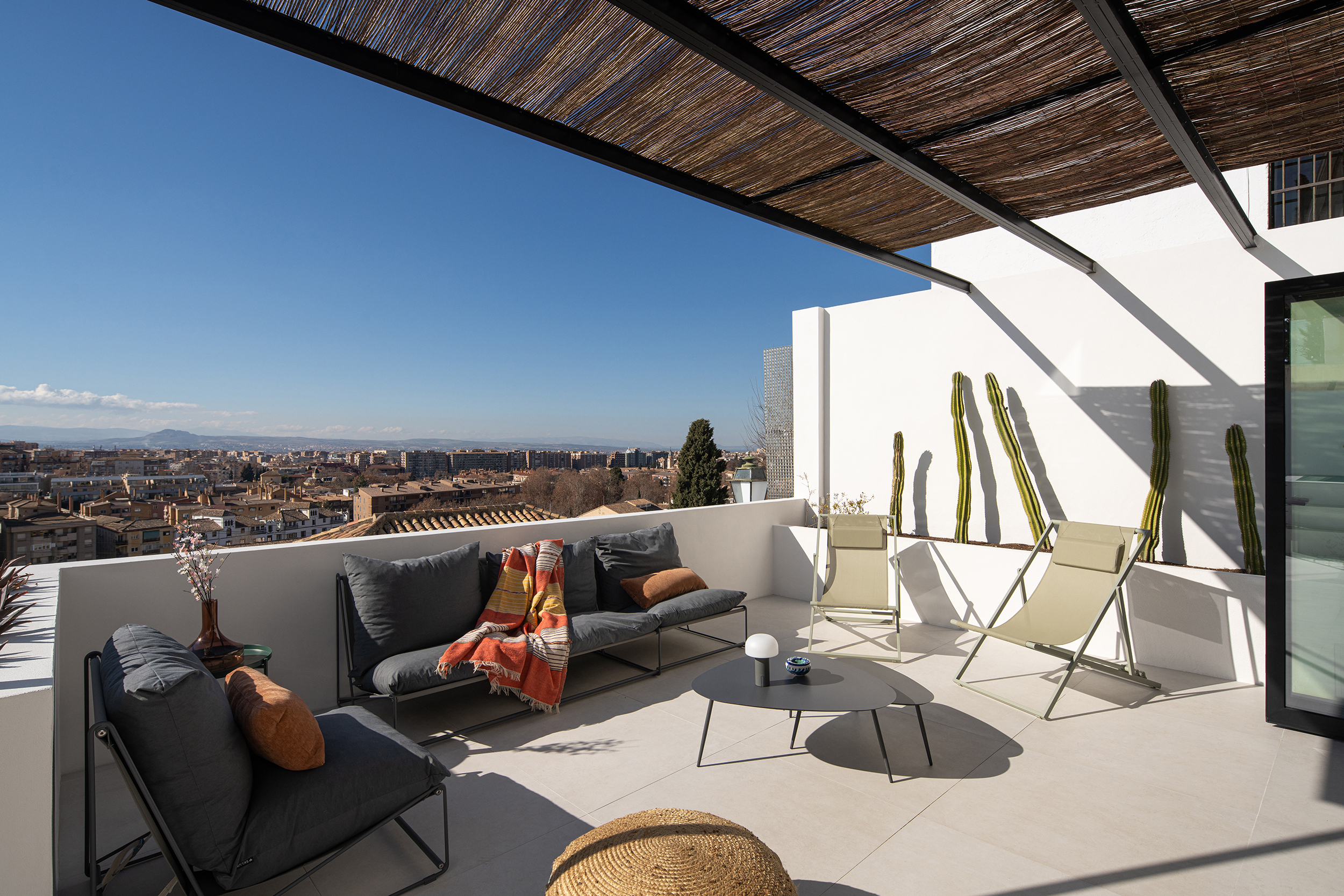
The apartment sleeps up to four guests and includes a private pool with exclusive use, an outdoor shower, and a large private terrace looking out toward the Sierra Nevada. After a long evening at the crosses, that combination matters more than it sounds. There is also a full kitchen with a Nespresso machine, dishwasher, and oven for slower mornings, plus 1 Gbps fibre WiFi, air conditioning in the bedroom and living room, a personal host welcome, and free street parking directly outside the door. The host's curated Granada guide includes which neighbourhood crosses are usually worth visiting that year — the kind of local detail you won't find in any printed reference.
For three days of music, walking, free tapas, and late nights, you want the right base. Book direct at terraza6.com for the best rate.