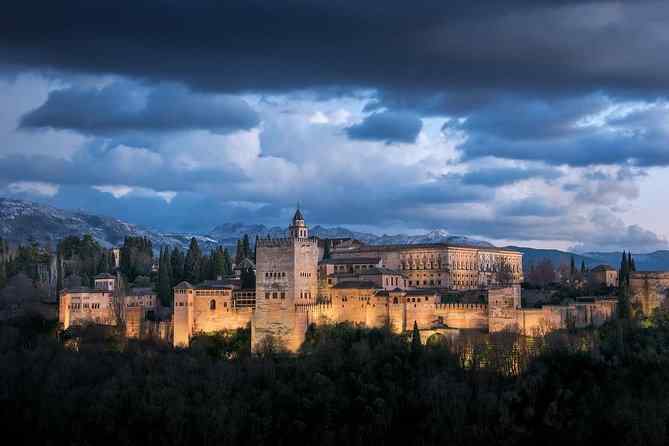
The Albaicín is Granada's oldest neighbourhood and one of the best-preserved medieval Islamic urban quarters anywhere in Europe. It was designated a UNESCO World Heritage Site in 1994 — the same listing as the Alhambra — and it's easy to see why once you're in it. The streets largely follow the same pattern as they did in the 11th century: narrow cobbled lanes, hidden squares, and the walled garden houses called cármenes, stacked up a steep hillside that faces the Alhambra directly across the Darro valley.
Most people visit for the Mirador San Nicolás and leave, which is understandable — the view from there is extraordinary — but the neighbourhood rewards those who wander further. The tea houses on Calderería Nueva, the path along the Darro riverbank, the quieter viewpoints higher up the hill: these are where the Albaicín starts to feel less like a tourist attraction and more like a neighbourhood that happens to be historically remarkable.
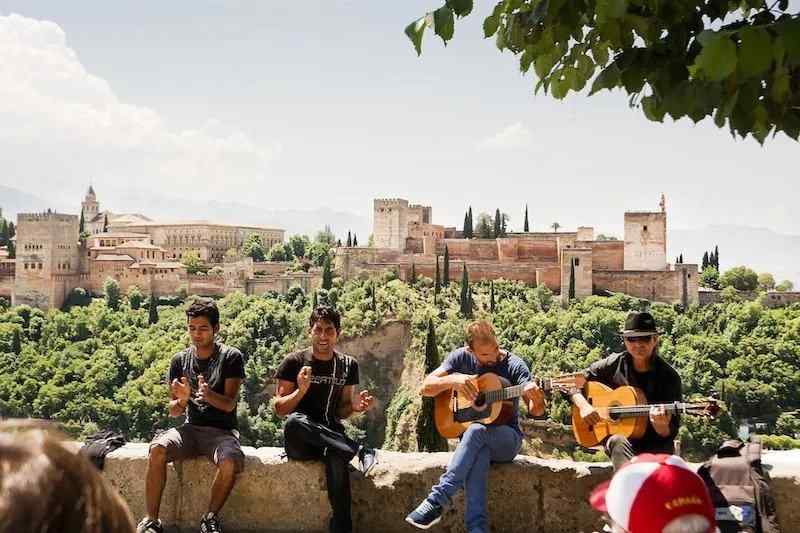
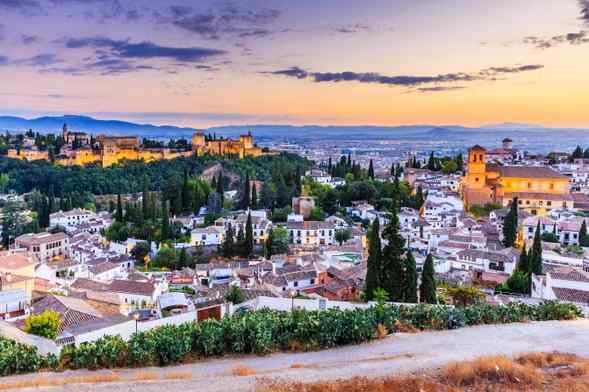
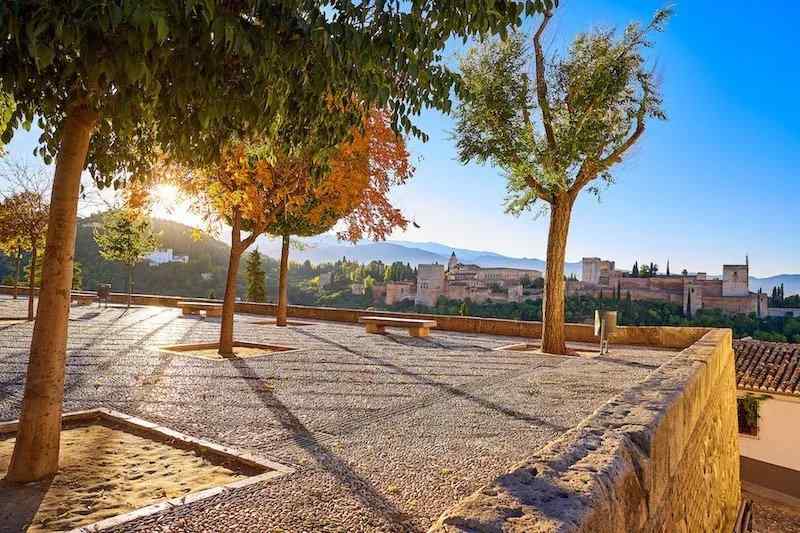
Granada's most celebrated viewpoint, with an unobstructed line of sight directly across to the Alhambra and the Sierra Nevada behind it. Sunset here is something of a ritual for locals and visitors alike — arrive early if you're going at that time, as it fills up fast. The square itself has street musicians most evenings and a small terrace bar with the same view at your back.
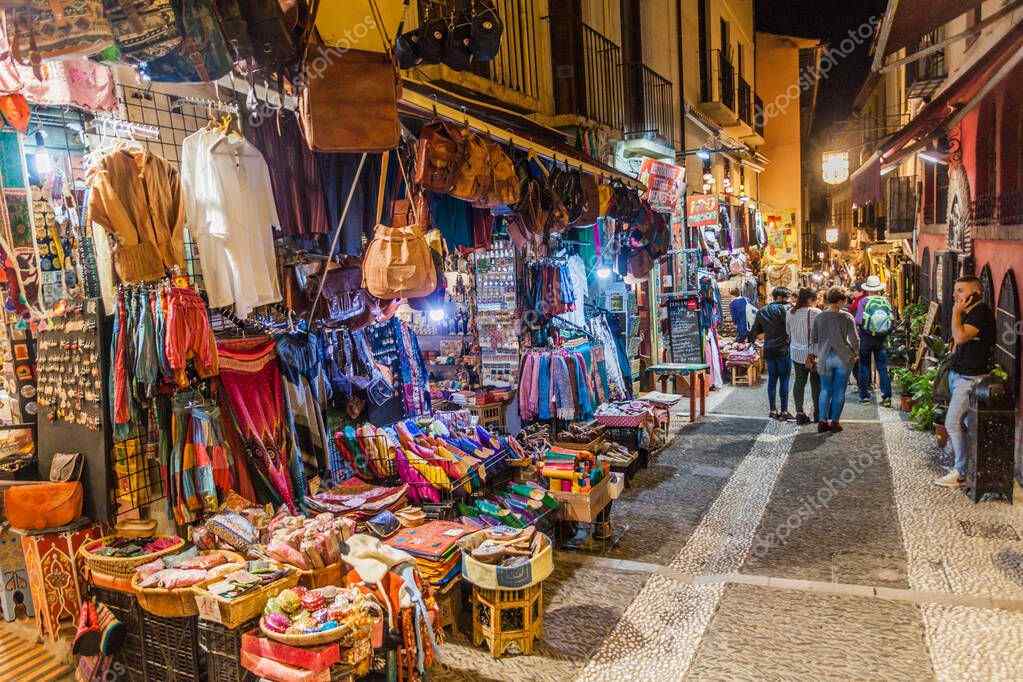
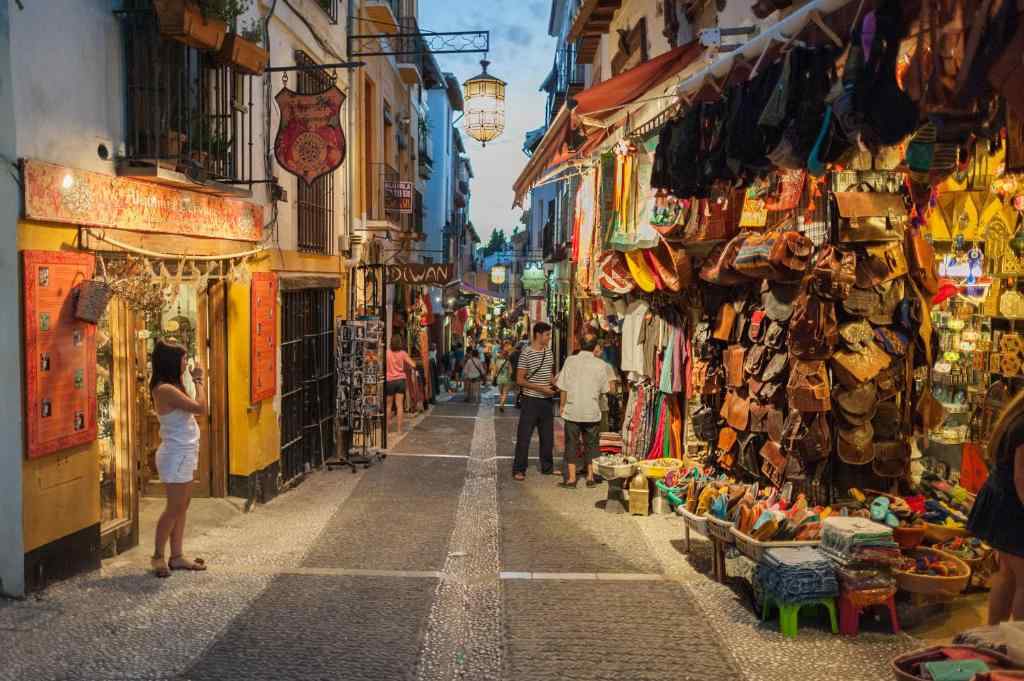
Known informally as the tea street, Calderería Nueva is a narrow lane packed with Moorish-style teterías, craft shops, and hookah bars. The tea houses serve decent mint tea and North African pastries — many offer set menus with baklava and small plates. It's touristy but genuinely atmospheric, and the Moorish aesthetic is not an act. This street connects Plaza Nueva with the upper Albaicín and has maintained its character since the Nasrid period. Drop in during the evening when the lanterns go on and the crowds thin out. The shops sell leather goods, ceramics, and lamps at reasonable prices if you bargain gently.
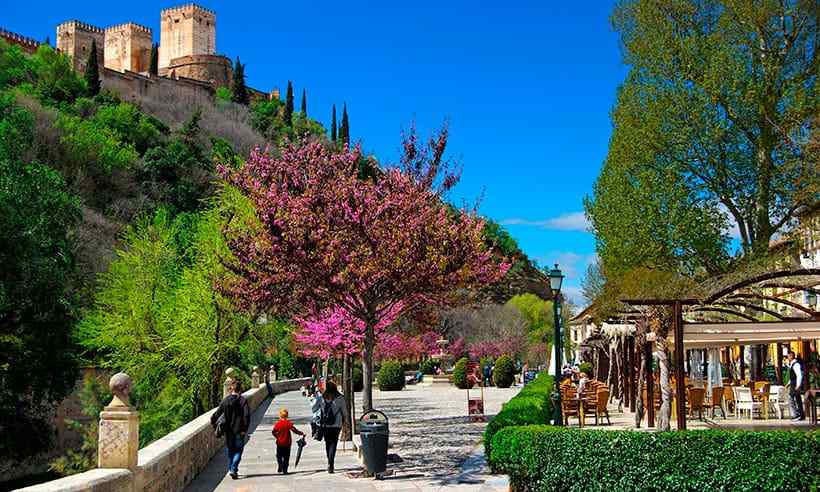
A wide promenade running along the Rio Darro at the foot of the Alhambra hill, with the fortress walls and tower battlements rising directly above. The name — Promenade of the Sad — comes from funeral processions that historically passed this way to the cemetery beyond. Today it is lined with cafe terraces serving drinks and tapas, and on summer evenings street musicians play against the backdrop of the illuminated Alhambra. The promenade connects the Carrera del Darro with the path up into Sacromonte. From here you can also access the Cuesta de los Chinos, a cobbled trail behind the Alhambra walls.
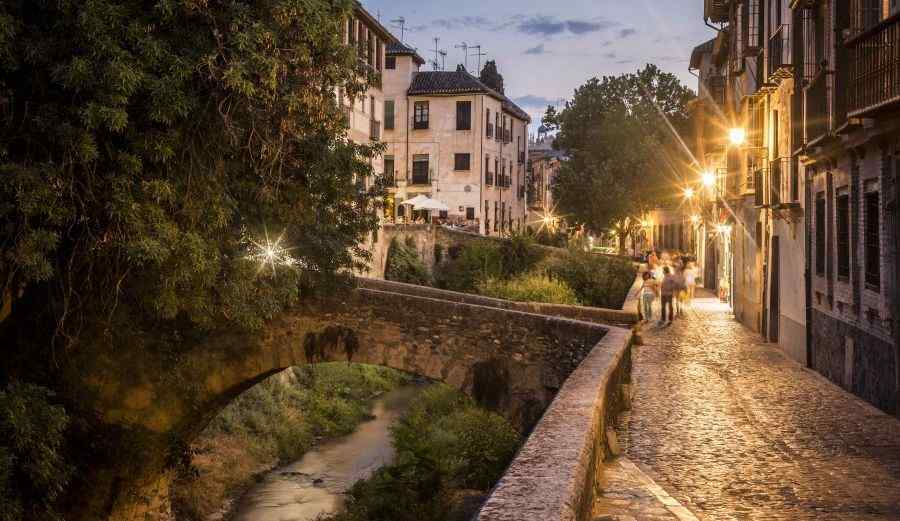
The street running beside the Río Darro at the base of the Albaicín hill, connecting Plaza Nueva with the Paseo de los Tristes. Some of the most impressive street-level views of the Alhambra are from here — the fortress rises directly above on the opposite bank. The Baños Árabes del Bañuelo, the oldest surviving Arab baths in Spain (11th century), are also on this street.
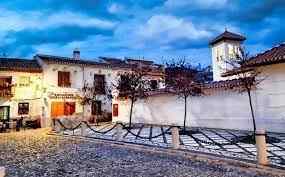
The Albaicín's residential character is defined by its cármenes — large private houses with walled gardens, many of Nasrid-era origin. From the street you often see only a plain whitewashed wall with a heavy wooden door, but inside are gardens that look out over the city. The street layout itself is a UNESCO-recognised survival of the medieval Islamic urban plan, largely intact after more than 500 years.
A private apartment in Realejo — 900 m from the Alhambra, with a private pool, panoramic terrace, and direct booking.
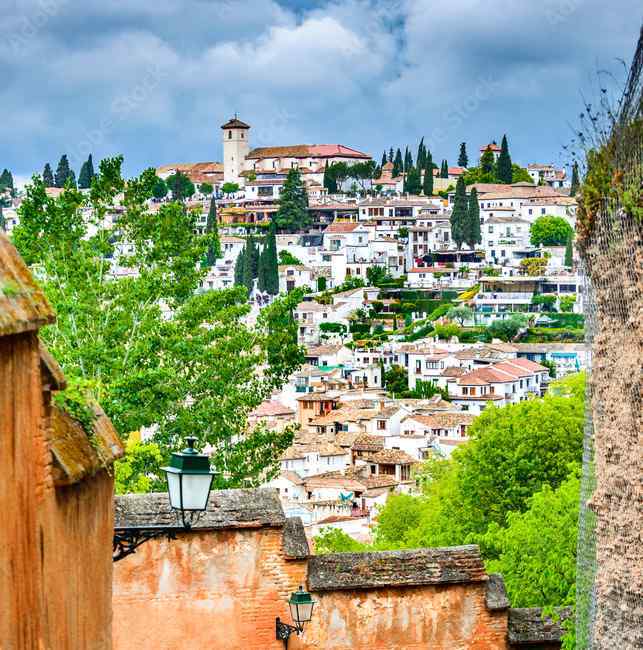
A cobbled path running behind the Alhambra along the Darro gorge, offering unusually close views of the fortress walls rather than the usual panorama from across the valley. The walk from the Paseo de los Tristes up to the Alhambra entrance via this route takes about 20 minutes and is far more interesting than the road alternative — quieter and genuinely atmospheric.
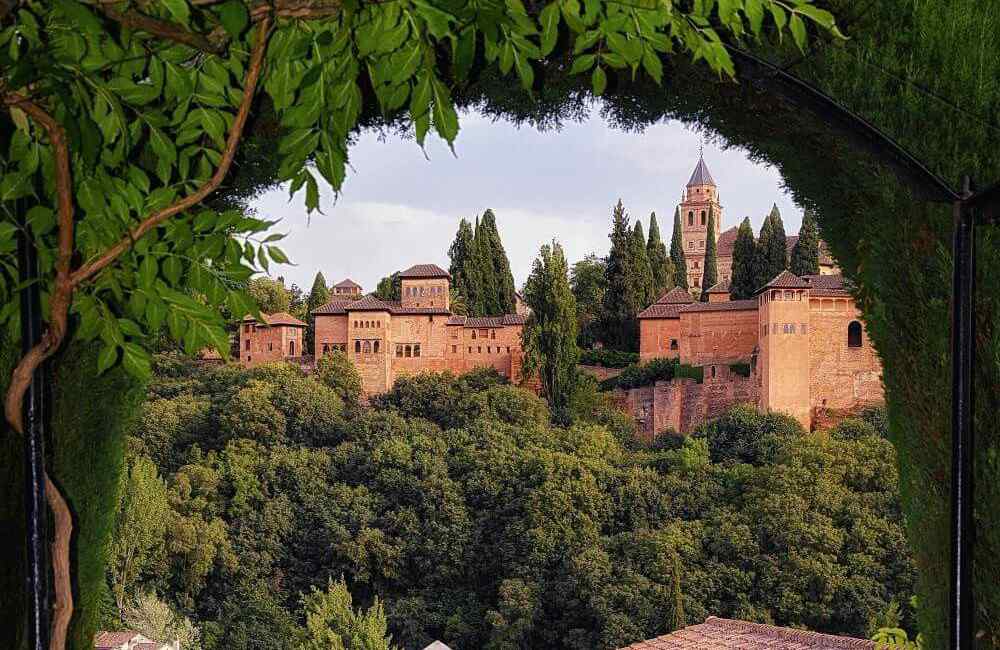
A historic carmen belonging to the University of Granada, with a formal terraced garden laid out across several levels on the hillside. The Alhambra view from its upper terrace is one of the most intimate in the neighbourhood — closer and more private than the panorama at Mirador San Nicolas. The garden itself has cypresses, citrus trees, and water channels in the traditional Nasrid style. It is open to the public on weekday mornings (check the university website for current hours) and occasionally hosts concerts and cultural events. A calm alternative when the main viewpoint gets crowded.
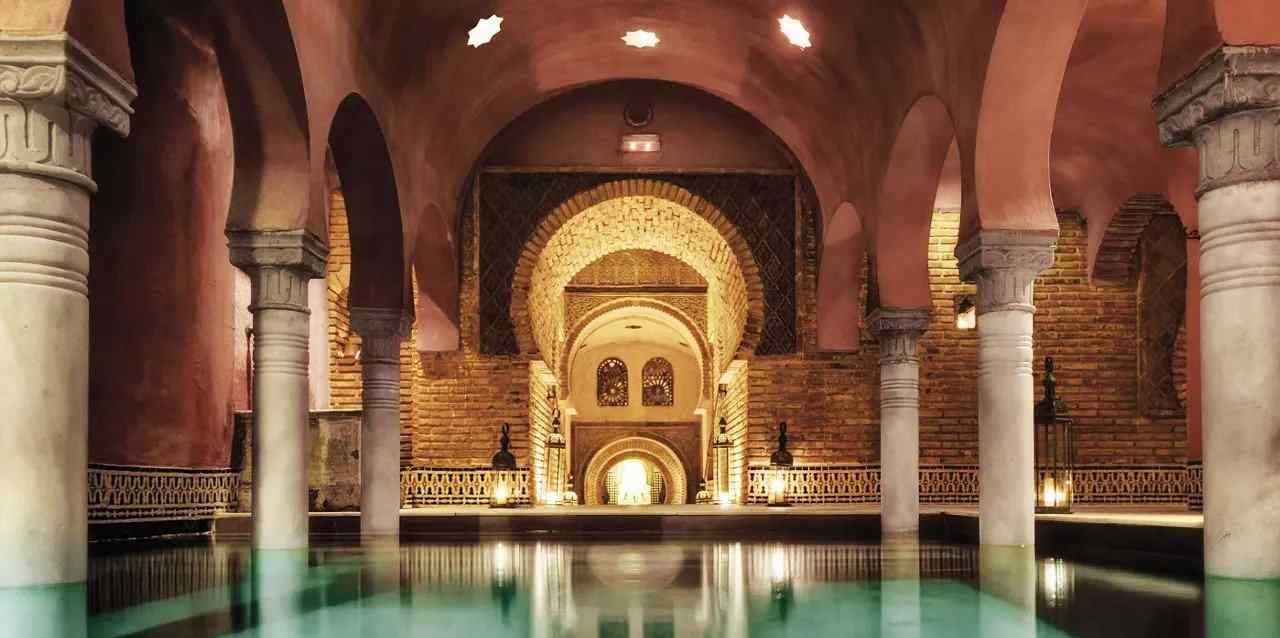
A well-run Arab bathhouse on Calle Santa Ana, just off Plaza Nueva at the entrance to the Albaicín. The building is designed in the Nasrid style with star-shaped skylights, and the circuit moves through hot, warm, and cold pools with an optional massage. It's popular — book at least a few days ahead, particularly in summer and at weekends.
The main social square in the upper Albaicin and noticeably less touristy than the Mirador area. The 16th-century Iglesia de San Miguel Bajo anchors one end, and the rest of the square is ringed with cafe terraces that fill up on warm evenings with a largely local crowd. The tapas bars here are better value than those near San Nicolas — try Bar Lara or El Acebuchal for standard Granadan tapas at honest prices. The square is also a natural rest point if you are walking the upper Albaicin: it sits roughly midway between the Mirador de San Nicolas and the path down to Plaza Nueva. Worth a proper stop rather than a quick pass through.
Ideal for couples, honeymoon stays, and small families up to 4 guests who want privacy, views, and easy planning.

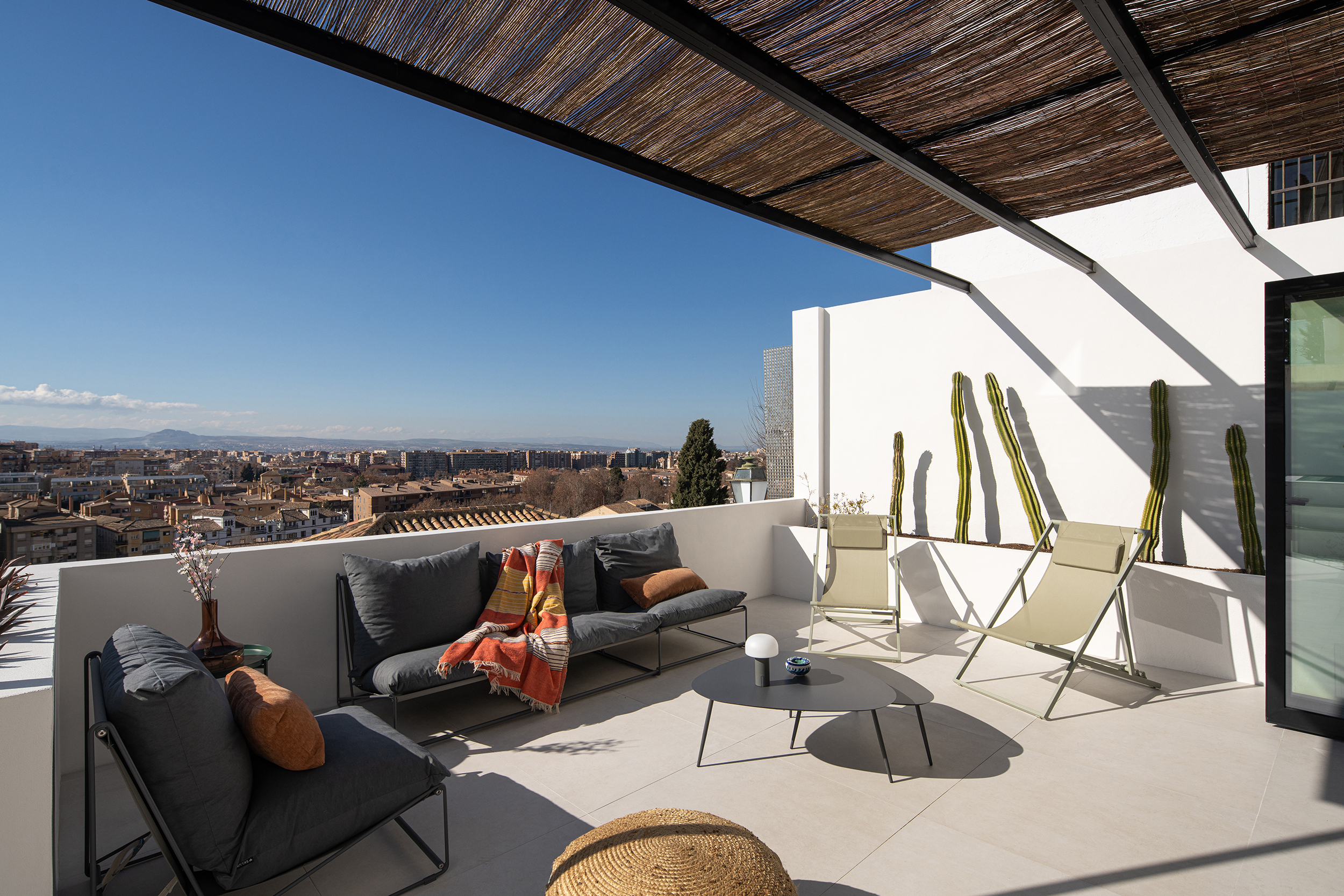
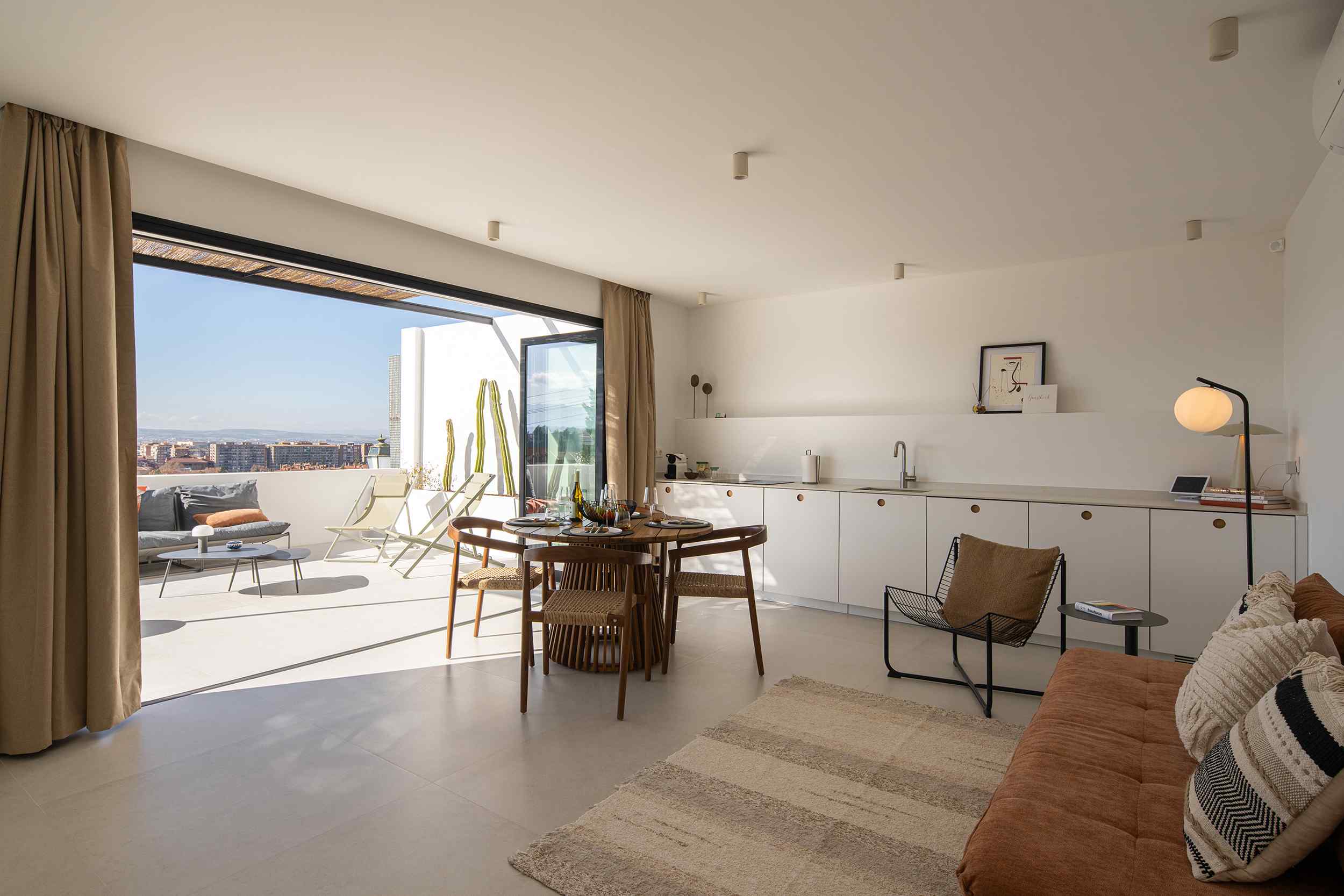 Overview
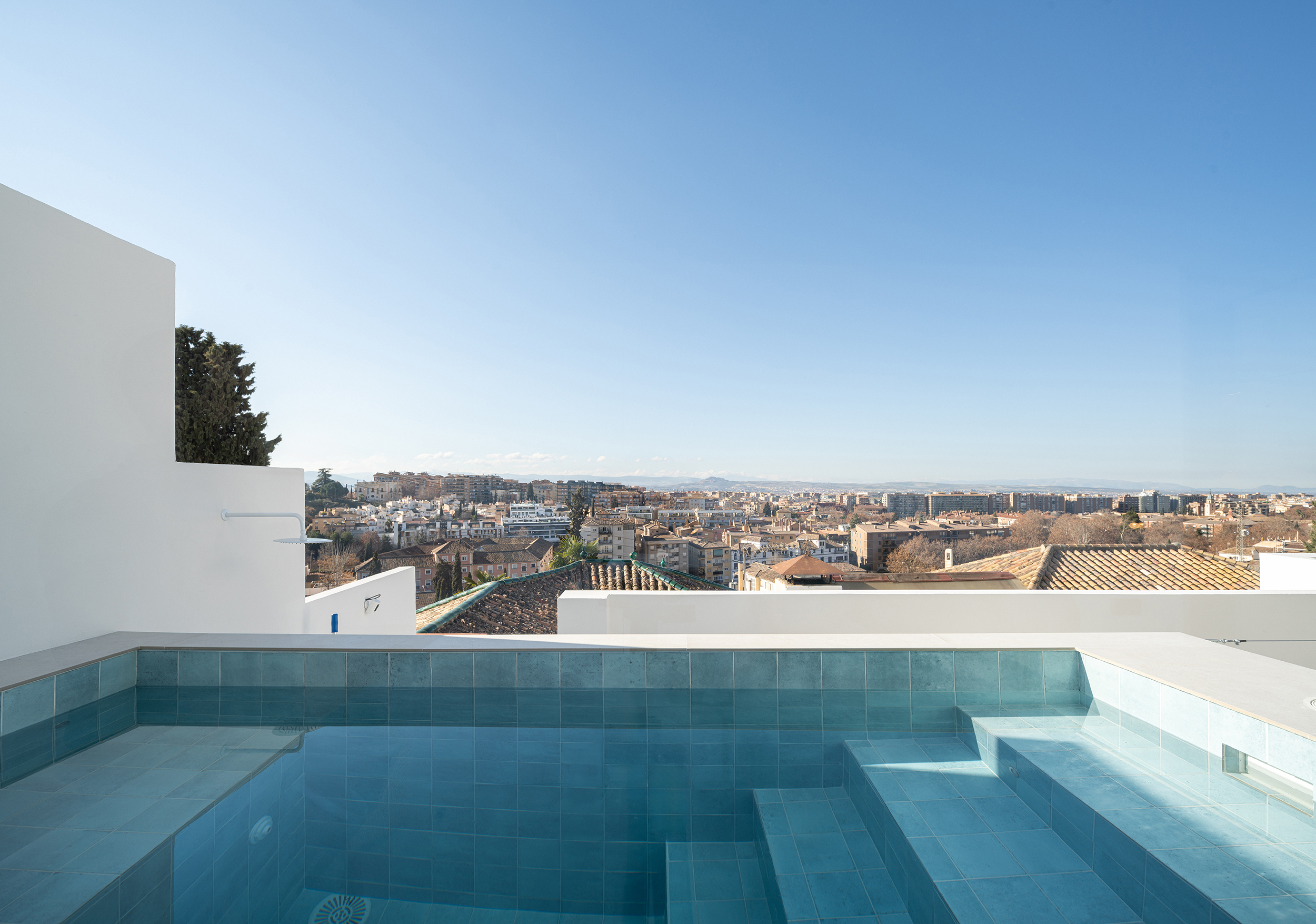 Private Pool & Parking
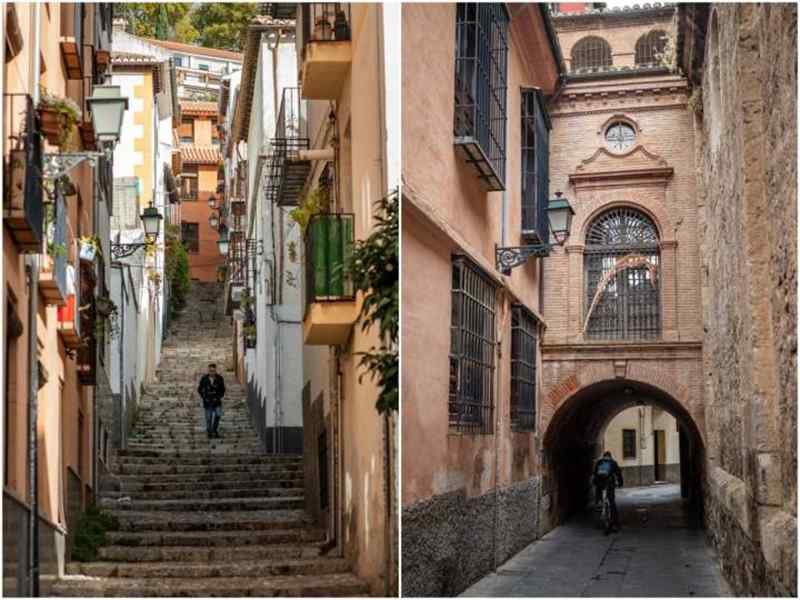 Location — Realejo
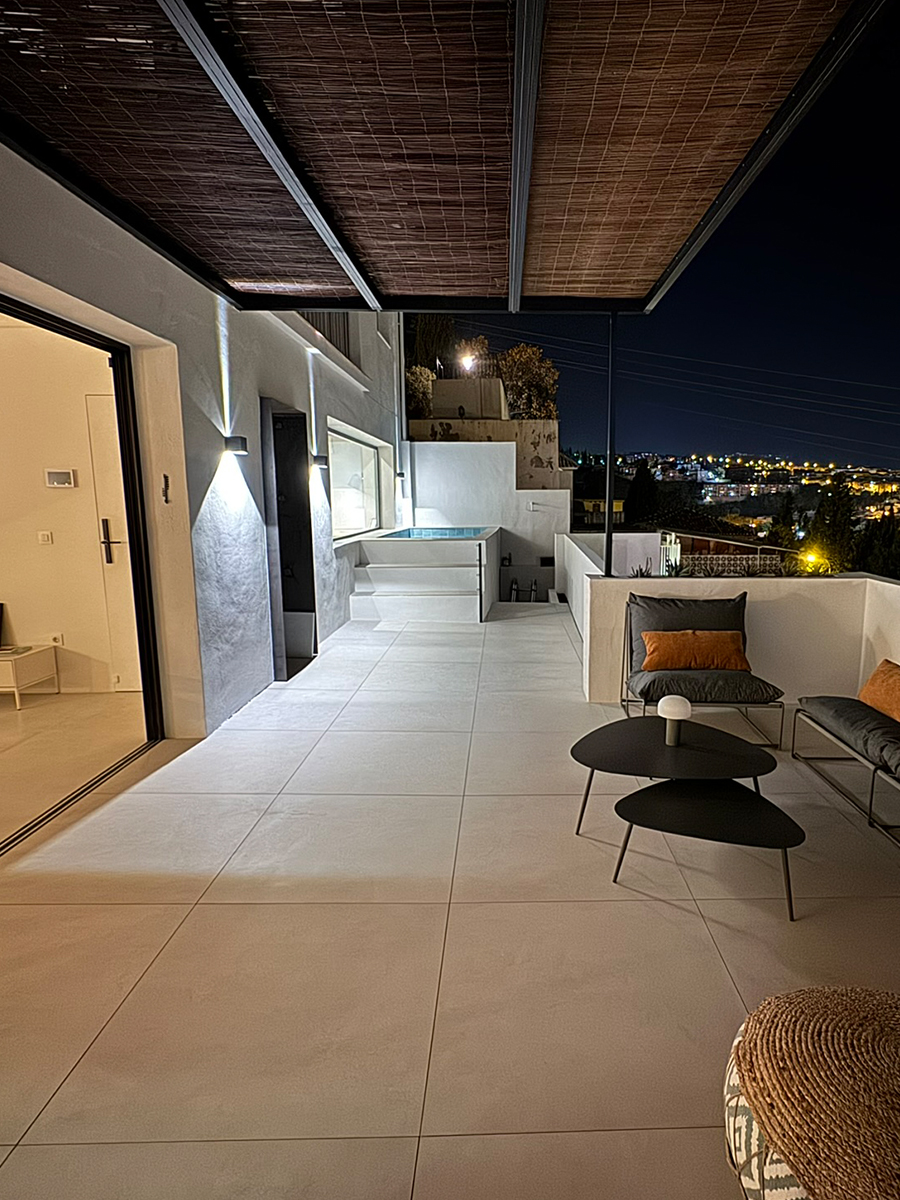 Contact the Owners
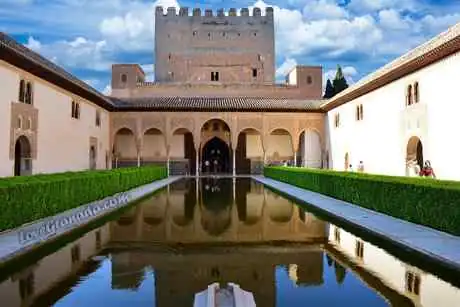 Alhambra
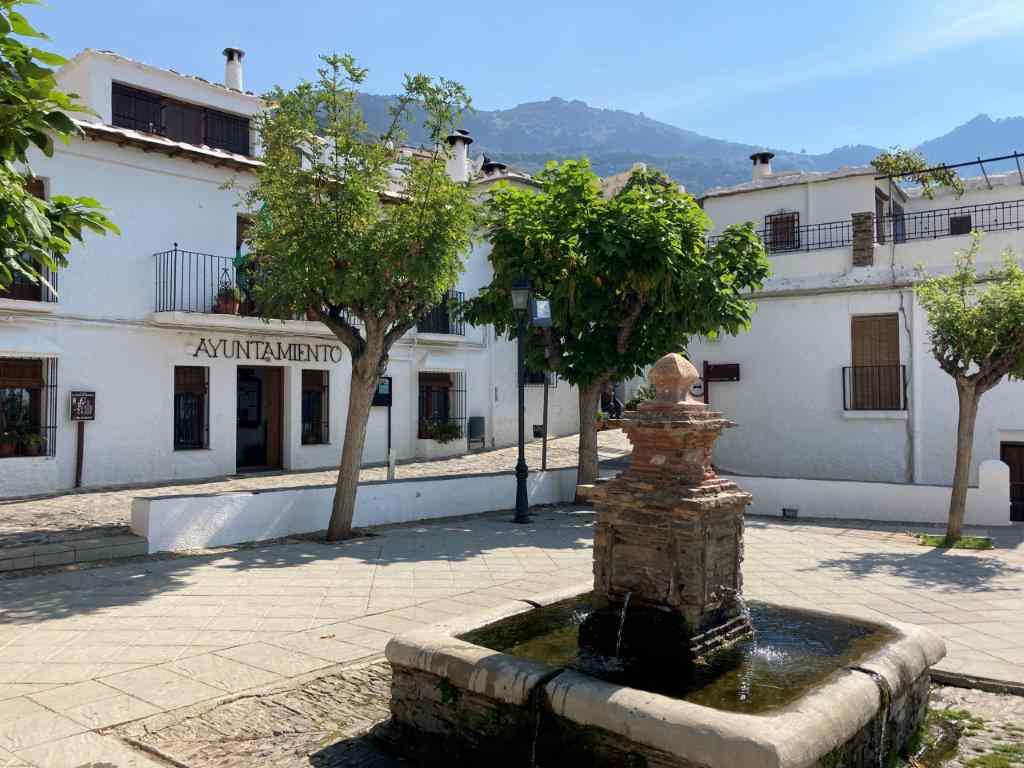 Alpujarras Villages
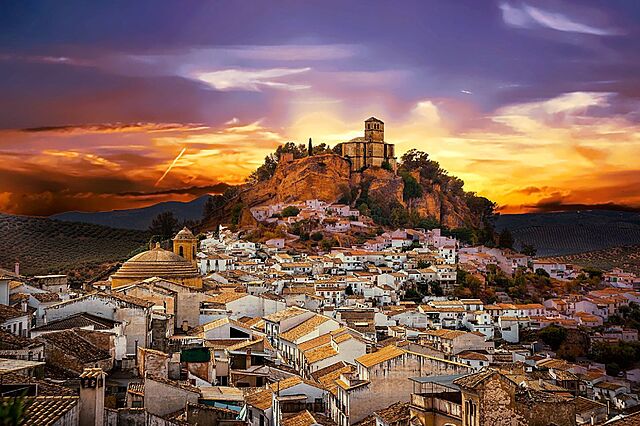 Towns Near Granada
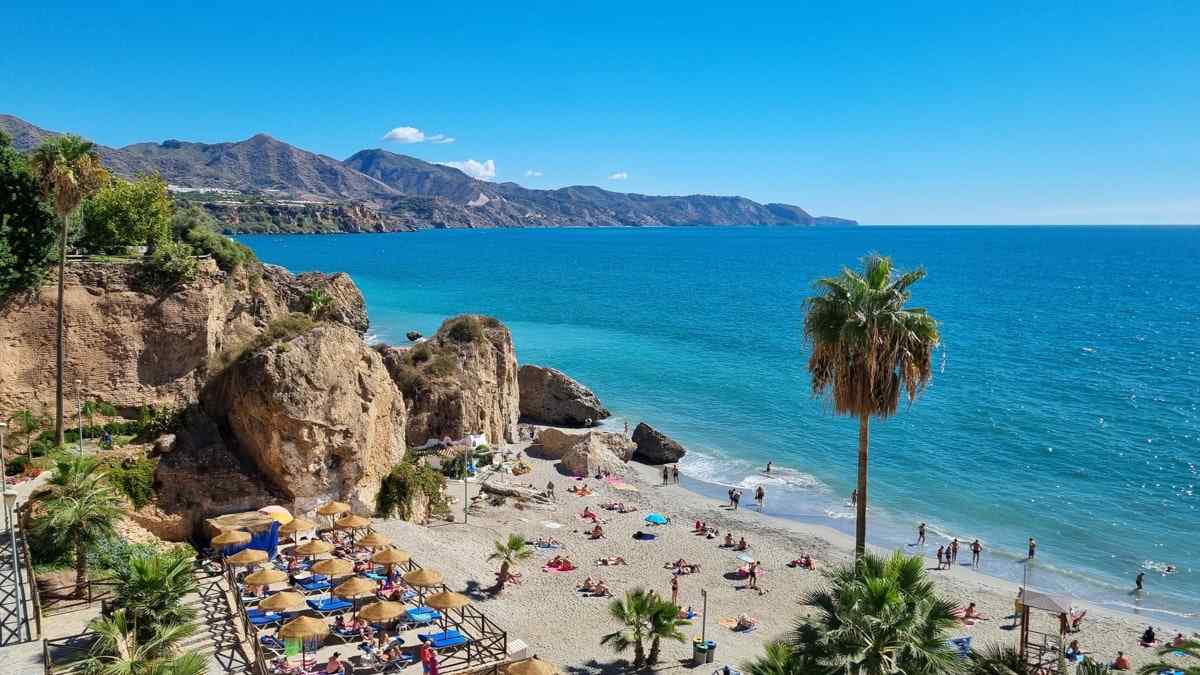 Costa Tropical
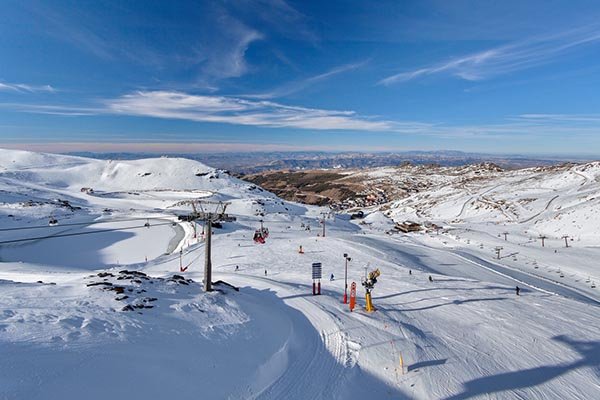 Sierra Nevada