 Terraza 6
July 1, 2026
12 min read
 Terraza 6
From limestone gorges with hanging bridges to Mulhacén at 3,479m — the trails near Granada you can actually walk on a city break.
Granada is one of the few European cities where you can eat tapas at midnight and stand at 3,000 metres by lunchtime the next day. Within a 20-minute drive you can be walking a limestone gorge with hanging bridges over a river. Within 45 minutes you can be at the base of mainland Spain's highest mountain. Very few cities of 230,000 people have this kind of terrain on their doorstep, and even fewer make it this easy to get out and back the same day.
This is a practical guide to the best hiking trails near Granada — the ones worth planning a day around when you are already in the city. No filler, no generic listicle entries. Every trail here is one you can genuinely reach with a car from central Granada, hike, and be back for dinner in Realejo or Albaicín. Distances, drive times, difficulty, and seasonal honesty are all in here.
Plus, a note on the angle: you do not have to choose between a city holiday and a hiking holiday in Granada. Sleep in a proper apartment in the centre, drive out at dawn, and be back on a terrace with a beer by seven. That combination is what makes hiking here different from a mountain-village trip in the Pyrenees or the Picos. The city is the base. The mountains are the day.
Before the detail, a short overview so you can match trails to your fitness, time, and interest. Drive times are from central Granada.
If you only do one hike near Granada, do this one. Los Cahorros runs through a limestone gorge cut by the Rio Monachil, and the trail crosses it repeatedly on hanging bridges — some barely wider than a single person — strung above the water. It is not a tourist attraction pretending to be a hike. It is a hike that happens to be spectacular.
The trailhead is in Monachil village, about 12 km south of the city, roughly a 20-minute drive. Depending on which loop you take, expect 7 to 12 km and two to four hours. Elevation gain is manageable — 200 to 350 metres — but the path near the river is slippery, there is some boulder scrambling, and if you have vertigo, the bridge sections are honest work.
Go in spring or autumn if you can. The river is fuller, the vegetation is greener, and the crowds are lighter. Summer works if you start early — the natural pools along the river are excellent for a swim afterwards — but weekends in July and August get busy, especially near the bridges.
Park at the roadside in Monachil village. Free. Grab a bocadillo and water at the bar before the trailhead.
Twenty minutes northeast of Granada, the Sierra de Huétor natural park is a completely different landscape — dense pine and oak forest, cool even in July, and signed loops from 5 to 15 km. It is quieter than Monachil by an order of magnitude, and in the height of summer, the forest sits five to eight degrees below the city temperature.
This is where you go with mixed-fitness groups, families, or on a rest day when you still want to move. Multiple signed car parks inside the park, all free. Deer and birds of prey are regular. If you are here in July or August and Monachil sounds unbearable, come here instead.
Staying in Granada?
This is the hike serious walkers rave about, and rightly so. From the village of Güéjar Sierra, about 35 minutes east of Granada, the Vereda de la Estrella follows the Rio Genil up into the heart of the Sierra Nevada, ending below the cirques of the Mulhacén massif. Eighteen kilometres round trip, roughly 1,100 metres of climbing, five to seven hours of walking.
The path is a well-maintained track, mostly wide, no technical sections. The difficulty is honest — sustained climb, real distance — but there is nothing to scramble and nothing to fall off. The reward is a valley that gets more dramatic every kilometre, a waterfall at the head, and, in early summer, snow still clinging to the ridges above. Golden eagles are a real possibility.
Mountaineers use this route to acclimatise before attempting Mulhacén. You do not have to. The valley walk alone is worth the day. Best from May to October. In July and August, start at first light — the altitude helps but midday is still hot.
An hour south of Granada, in the Alpujarras, the Barranco de Poqueira is a deep gorge with three white Moorish villages stacked up its sides — Pampaneira, Bubión, and Capileira. The trails between them follow ancient acequias — irrigation channels built by the Moors and still in use — and terraced hillsides that have been farmed for a thousand years.
Ten to fourteen kilometres depending on your loop, 350 to 600 metres of climbing, three to five hours. The GR7 — the long-distance path that runs from Greece to Tarifa — passes through here. Well-marked, mostly manageable, though the acequia paths get slippery after rain.
A good plan: walk up to Capileira, the highest of the three villages at 1,436 metres, have lunch there (noticeably cooler than the valley), and walk back down. If you have the energy for it, combine with a short drive to Trevélez — Spain's highest village at 1,476 m, famous for air-cured ham. It makes for a full day of walking, eating, and driving through the Alpujarras.
Twelve kilometres, three to four hours, about 500 metres of climbing. The trailhead is at Dilar village, 30 minutes south of Granada. Forest and river valley, views back to the city and out to the Sierra Nevada, and honestly, far fewer people than Monachil.
Locals use this trail as their default Sunday walk. In spring the wildflowers are excellent, and there are decent swimming spots in early summer while the river is running properly. If Monachil is packed on a weekend, come here.
You can climb Mulhacén in a single day from Granada. That fact alone should be on more travel lists. It is the highest peak in mainland Spain, and its normal route is a long, non-technical walk — no ropes, no scrambling, no ice work in summer.
The most accessible approach starts from Hoya de la Mora at 2,500 metres, reached by car from the Pradollano ski station (about 45 minutes from Granada). From there, it is roughly 10 km one way to the summit, six to nine hours round trip, with 1,000 metres of climbing. The route is well-marked. The difficulty is altitude and distance, not terrain.
Summer bus restrictions: from late June to mid-September, private vehicles are restricted on the road up to Hoya de la Mora. A shuttle bus runs from Pradollano — advance booking recommended. Check the Sierra Nevada National Park site for the current timetable before you go.
Gear honestly: waterproof shell, warm mid-layer even in August, proper boots, poles, minimum two litres of water, sun protection at high UV intensity. The summit temperature typically sits between 5 and 10°C and can drop fast when weather shifts. July to September is the window on the standard route. Earlier in the year needs crampons, an ice axe, and the experience to use them.
The view on a clear day is genuinely absurd — Atlantic and Mediterranean visible, North Africa on the sharpest days, and the Alpujarras dropping away to the south. There is a small shrine and a weather station at the top. That is it. Nothing built up. Just the summit and the country falling away.
Veleta is 80 metres shorter than Mulhacén and considerably less committing. From Hoya de la Mora, it is about 8 km to the summit, four to six hours round trip. The road from Pradollano to the Veleta base is the highest paved road in Europe, reaching around 3,300 m — outside the summer restrictions, you can drive to within 100 m of the summit and walk a short scramble up.
In summer the same bus restrictions apply. Views run north to the meseta and south to the Alpujarras and the Costa Tropical. The ski infrastructure is visible but does not really intrude. If you want a high-altitude Sierra Nevada day without the full Mulhacén commitment, this is the one.
Granada's hiking calendar has real seasonality. Getting the trail-and-season match right matters more here than in most European mountain areas because the range from 700 m in the city to 3,479 m at Mulhacén means five or six microclimates in a small area.
SeasonBest trailsAvoidMarch–MayAlpujarras (wildflowers), Los Cahorros, Barranco del Dilar; waterfalls at peakMulhacén, Veleta — still snow and iceJuneVereda de la Estrella, Poqueira, Huétor; Mulhacén from late June with proper gear—July–AugustAll routes open; high sierra at its best; start by 7amMidday starts anywhere; Monachil on weekendsSeptember–OctoberBest overall — cool, quiet, Alpujarras colours turningLate October: first snowfalls possible above 2,500mNovember–FebruarySierra de Huétor, Barranco del Dilar; Monachil possible but cold and wetHigh routes without crampons and experience
Be honest with yourself: a car is essential for every trail on this list. Granada's public transport to trailheads is close to non-existent, and the taxi fare to Monachil and back plus a wait will run to the cost of a rental day. Rent a car for the hiking days at least. Small hire-car options at Granada airport and in the city are reasonable outside August.
Free street parking in central Granada is limited. If you are staying somewhere with parking already sorted, this saves you 20 to 30 euros a day and a lot of hassle. Terraza 6 has free street parking directly outside the door — more on that below — which turns hiking days into simple 6 am departures instead of parking-garage negotiations.
From late June to mid-September, private cars are restricted above Pradollano on the road to Hoya de la Mora. A shuttle bus runs. This is standard practice in Spanish national parks in summer, protects the high fragile terrain, and works fine — but book ahead. The Sierra Nevada National Park site has the current timetable and booking. Check it the week before you go.
Sierra Nevada weather changes fast. The gear list below is not paranoid — it is the minimum for hiking above 2,000 m in summer.
Monachil village has a bar-cafe near the trailhead — grab water and a bocadillo before you start walking. Capileira in the Alpujarras has several genuinely good restaurants, and the bar scene around the jamón shops in Trevélez is worth a lunch stop.
On the high sierra routes there is nothing after you leave Pradollano. Pack everything in and everything out. A packed sandwich, fruit, salted snacks, and one emergency energy bar is a sensible summit-day kit. Have a proper meal waiting for you back in the city — hiking days end late, and Realejo's tapas circuit is a genuinely good reward.
If you are planning even two hiking days on a Granada trip, where you sleep matters more than it usually does. You are up early, back late, dirty, hungry, and carrying wet gear. A good hiking base makes the trip. A wrong one turns it into logistics.
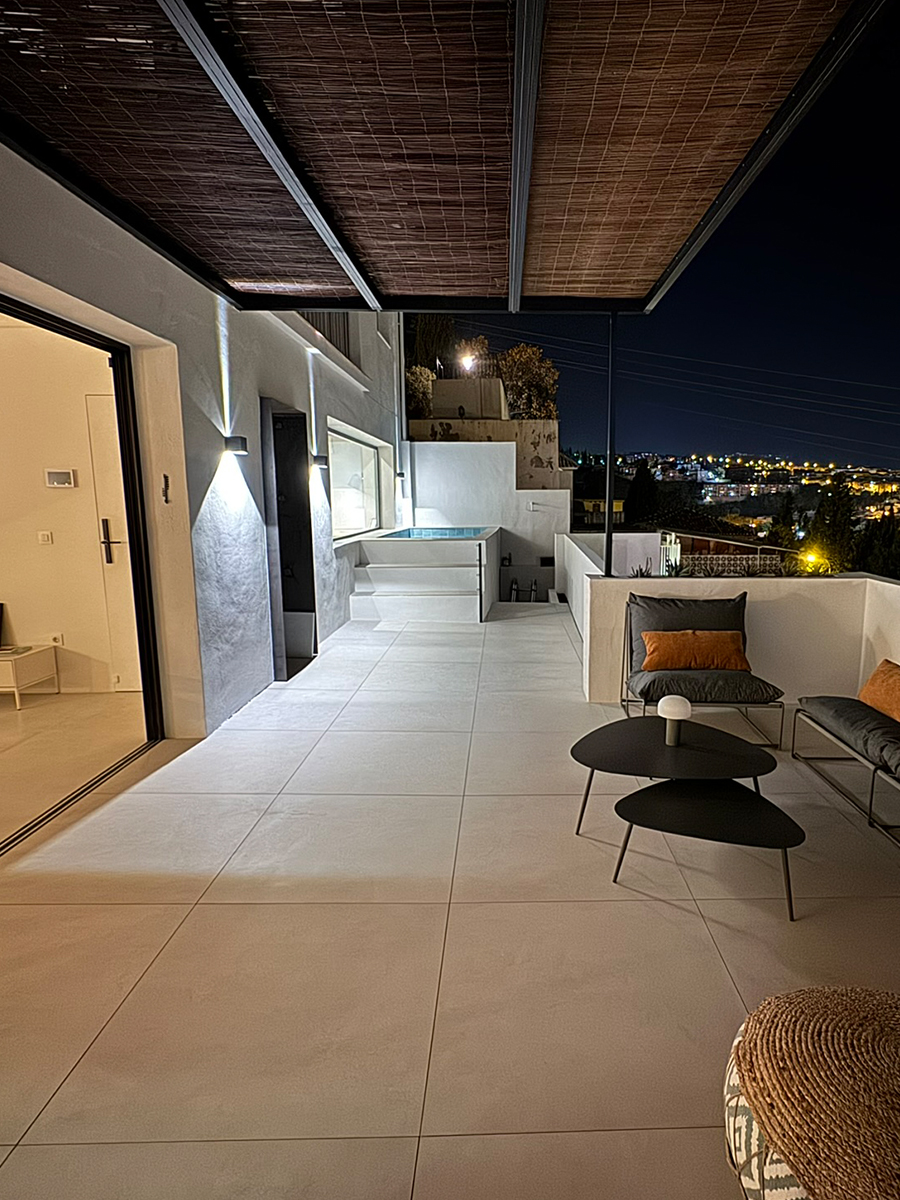
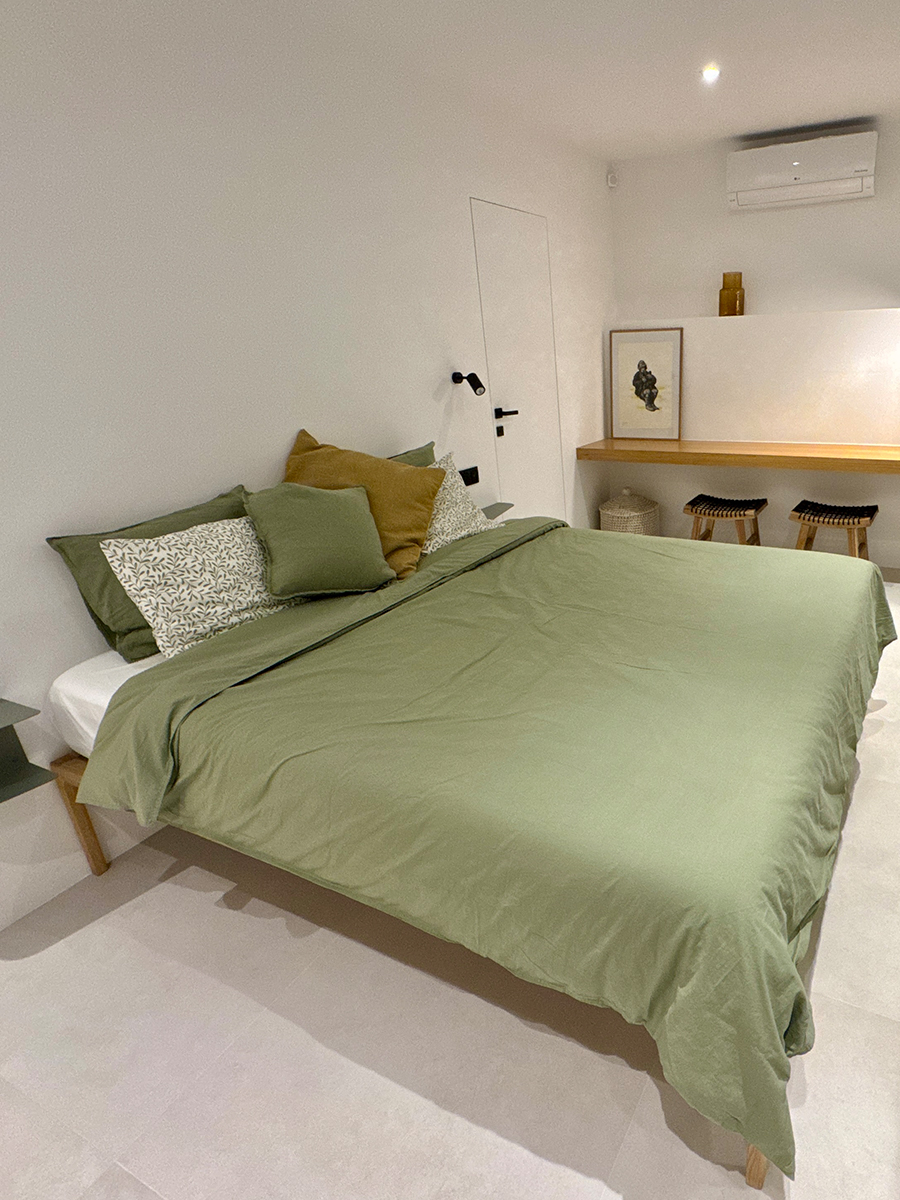
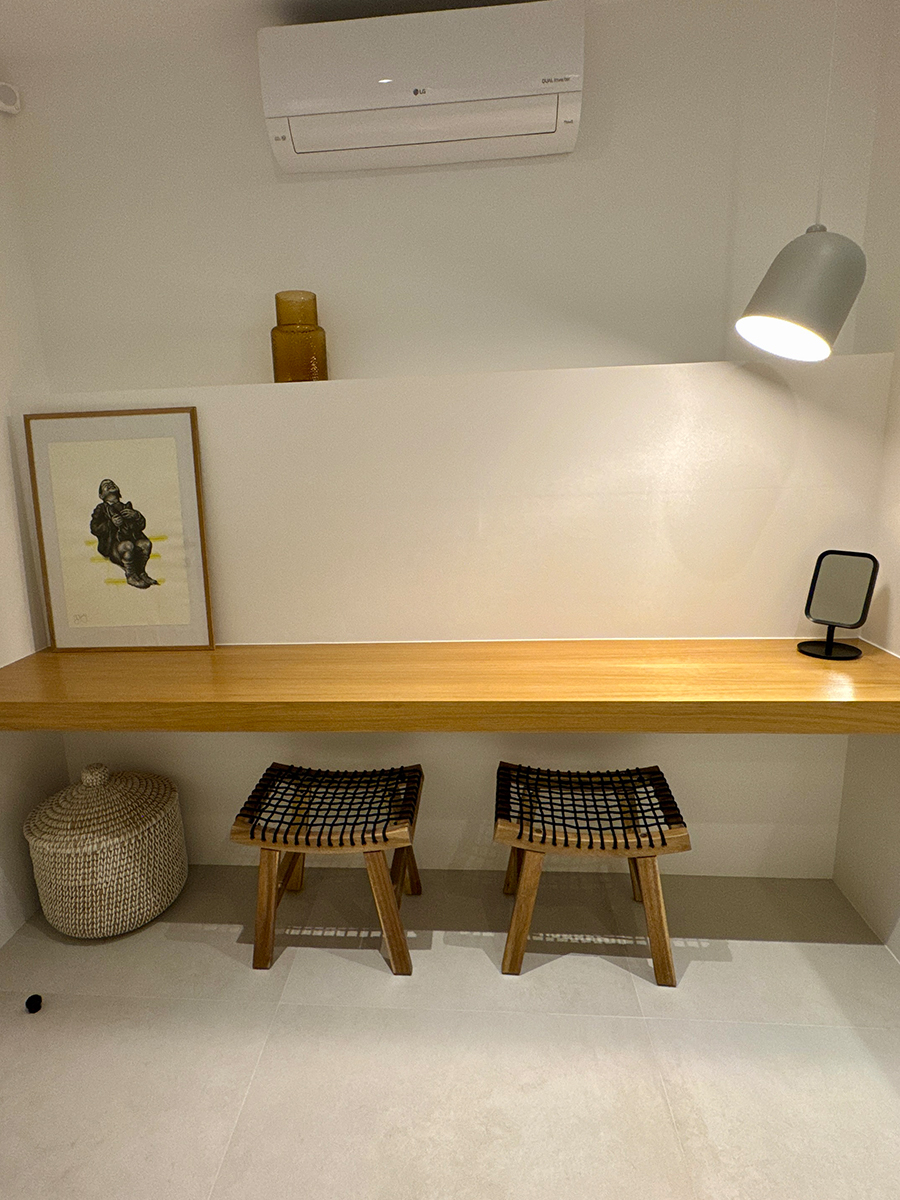
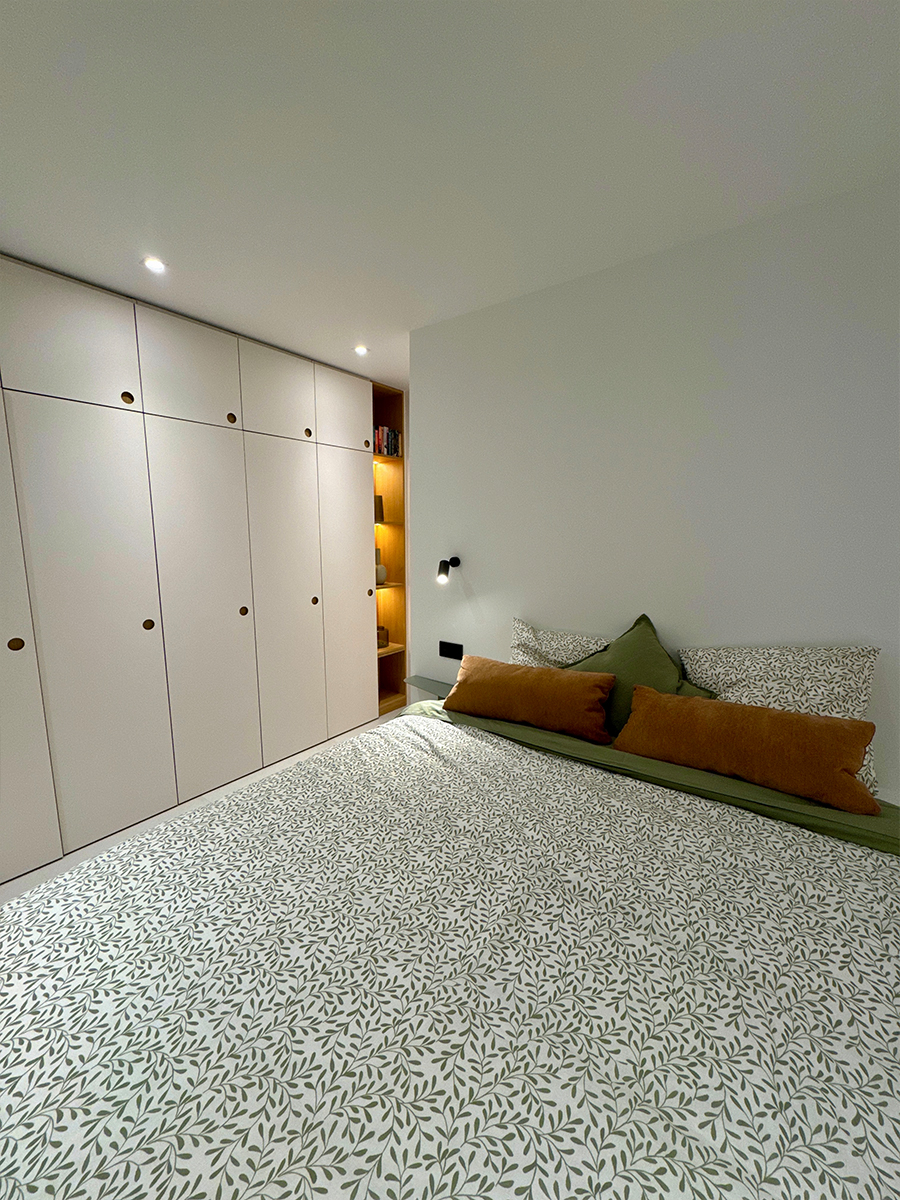
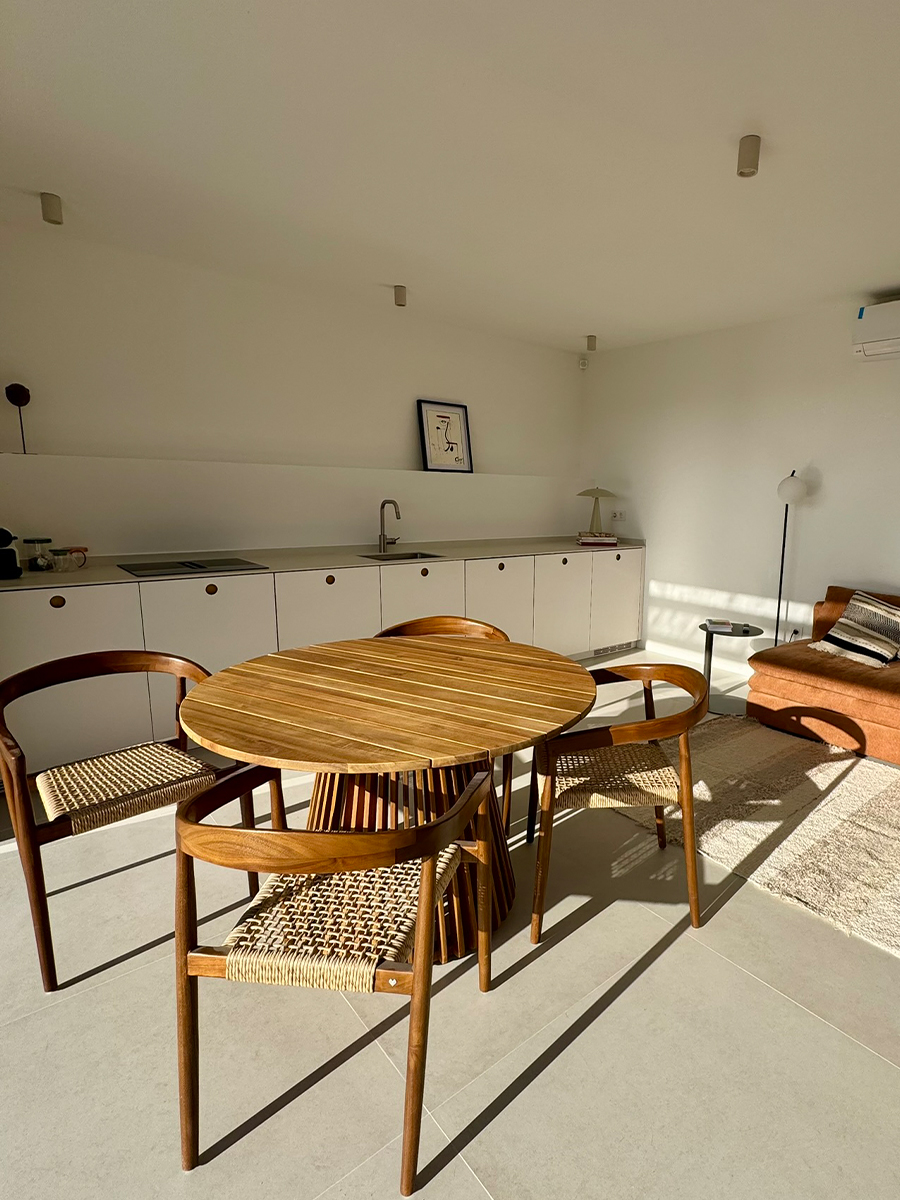
Terraza 6 works as a hiking base for a few concrete reasons. Free street parking directly outside means the car is there when you need it at dawn, no walk to a garage, no fee stacking day by day. The full kitchen means you pack a real trail lunch the night before and eat properly on return. The washing machine deals with hike-dirty clothes the same evening. The private outdoor shower runs into the private pool — after a hot day in the sierra, that sequence has a specific satisfaction. Air conditioning in the bedroom and living room means afternoon recovery actually works in July and August. And the private terrace looks out at the Sierra Nevada — sitting there with a beer after climbing something you can now see from the sofa is a particular kind of good.
The location is in Realejo, the old Jewish quarter, 900 metres from the Alhambra and a five-minute walk to Campo del Príncipe for the evening tapas circuit. So on rest days, or on the last day when your legs are done, the whole of central Granada is on foot. Sleeps up to four, which means splitting fuel and apartment costs with a hiking partner or couple makes the mountain days cheaper.
Book direct at terraza6.com for the best rate.
ItemDetailsLos Cahorros (Monachil) drive~20 min from central Granada; free roadside parkingSierra de Huétor drive~20 min; free car parks inside the parkGüéjar Sierra (Vereda de la Estrella)~35 min; small trailhead car parkPradollano ski station (Sierra Nevada base)~45 min; then shuttle bus in summerPampaneira (Alpujarras)~60 min; free village parkingMulhacén summer busLate June to mid-September, Pradollano → Hoya de la Mora; book aheadBest hiking season overallSeptember–October; May–June close secondNavigation appWikiloc — download tracks offline before leaving the cityWeather forecastAEMET (Spain's met office) — Sierra Nevada above 2,500m changes rapidly
Los Cahorros de Monachil. Twenty-minute drive, dramatic limestone gorge, hanging bridges over the river, and a genuine sense that you are on a real mountain path rather than a manicured tourist route. Do it in the morning, be back in the city for a late lunch.
Yes. Drive to Pradollano in 45 minutes, take the summer shuttle up to Hoya de la Mora at 2,500 m, and it is six to nine hours round trip to the 3,479 m summit and back. Non-technical, well-marked, but altitude and distance are real. Best from July to September. Start early — the shuttle timetable matters.
Yes, essentially. Public transport to trailheads is minimal. Rent a car for your hiking days at least. If you are staying somewhere with free parking sorted, the logistics get much simpler.
September and October, closely followed by May and June. Cooler temperatures, quieter trails, and the high sierra is snow-free. July and August work if you start at first light — the altitude of the Sierra Nevada gives real protection from the heat, but the lower gorge trails get busy and hot.
Yes. The Barranco de Poqueira loop between Pampaneira, Bubión, and Capileira is one of the best days out from Granada — Moorish irrigation channels, terraced hillsides, three genuinely old white villages, and lunch at 1,436 metres in Capileira. Combine with a short drive to Trevélez for the jamón shops and you have a full day.
The hanging bridge sections are the honest test. If you struggle with heights, the main long bridge is genuinely exposed. You can walk the lower section of the gorge and turn back before the bridges — you still get the river and the limestone walls, just not the crossing.
Somewhere with free parking, a full kitchen, laundry, and quick access back to the historic centre for evening tapas. Terraza 6 in Realejo hits all four — the parking is directly outside the door, which sounds trivial until you are leaving at six in the morning for the Sierra Nevada.
What guests say
"Siemen was a wonderful host and the place lived up to all the photos! We especially enjoyed the views and the outdoor space and found the walkability nice. Siemen was helpful with finding parking and providing what we needed for our infant to stay as well. 10/10 for the design of the place, would definitely stay again!"
"We loved everything, but the most the tarrace and the pool with amazing view! The appartment is very modern, clean, comfortable. There is everything what you need for short stay. The host - Siemen is wonderful- very niice, helpful and carrying. The location is very good, you can go by walk but if it is too hot, you can easy catch taxi- is very cheap in Granada. We used taxi all the time. The most beautiful place is Alhambra and old town with beautiful fointains. If you have enough tome visit the place woth flamenco! We spent 2 wonderul days in Granada! We had perfect stay by Siemen!!"
Everything in this guide works even better when you stay somewhere calm, private, and well placed for the city.
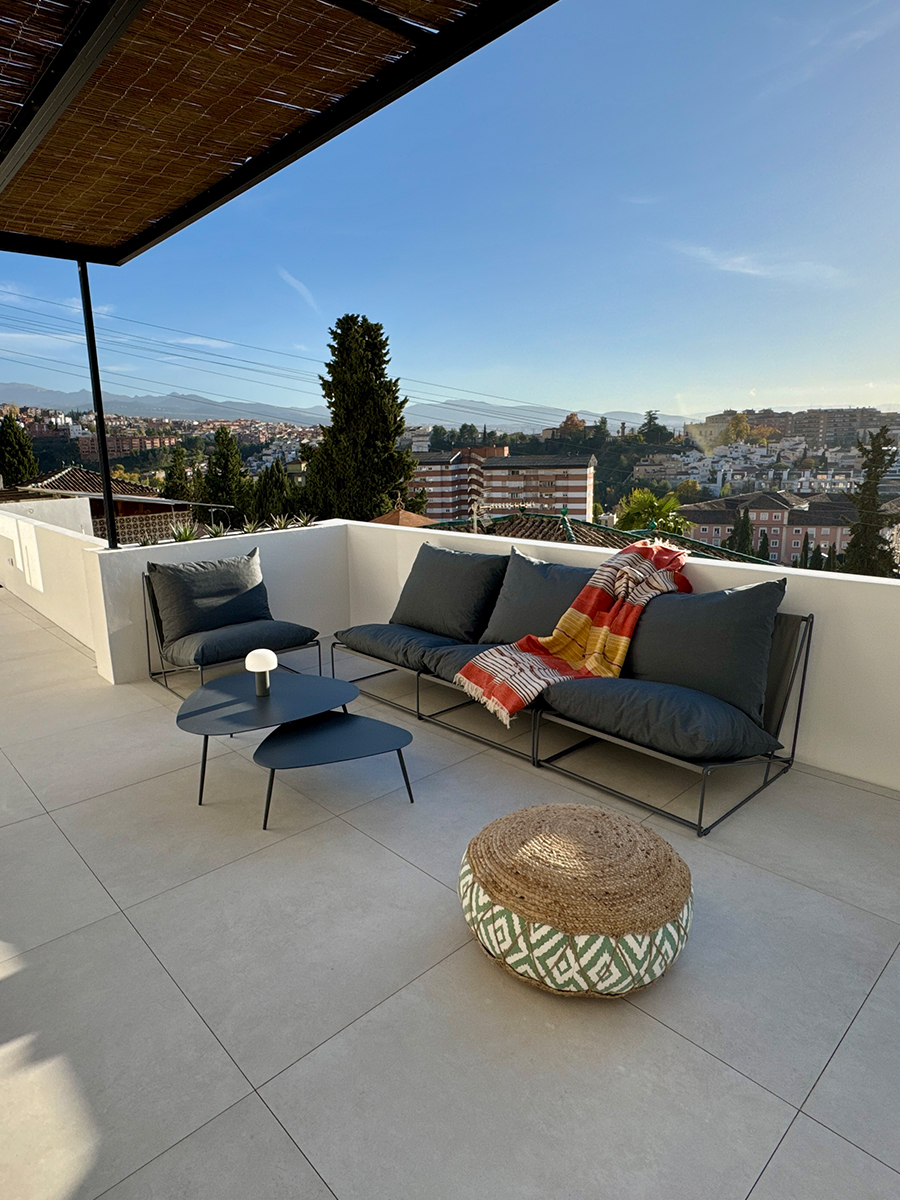
Luxury apartment with a private pool, city skyline and Sierra Nevada views, and a quiet Realejo location in Granada. No shared spaces.
View the apartment →Terraza 6 is a luxury apartment in Granada with a private pool, a spacious terrace with panoramic city views, and every comfort you'd want during a stay in Andalusia. It's designed for people who want more than a standard rental — somewhere with real character, thoughtful details, and a direct link to one of Spain's most remarkable cities.
The Alhambra, the Albaicín, and some of the best tapas bars in the country are all within easy reach. We know Granada well and share everything we've learned with every guest — from the most useful practical tips to the places most visitors never find.
Booking direct means you deal with us personally. We're easy to reach and happy to help before, during, and after your trip.