Back to Alhambra Overview The heart of the Comares Palace

Patio de los Arrayanes

The iconic reflecting pool at the centre of the Nasrid Palaces. Myrtle hedges, colonnade, and the Comares Tower reflected in stillness.

14th C Comares Palace era
45 m Height of Comares Tower
UNESCO World Heritage Site 1984
900 m From Terraza 6 in Realejo

The Patio de los Arrayanes is the serene courtyard at the centre of the Comares Palace, one of the crown jewels of the Nasrid Palaces. Here lies a long rectangular pool fed by water channels, its surface reflecting the colonnaded porticos that surround it and, most famously, the Comares Tower rising above. The name comes from the myrtle hedges (arrayanes in Spanish) that line the water on both sides, their fragrance a sensory anchor in this stone courtyard built nearly seven centuries ago.

To stand at the Patio de los Arrayanes is to encounter the Nasrid architectural vision at its most refined. The courtyard obeys the Islamic garden typology that separates public from private, heat from water, light from shade — but here, in this palace courtyard, every element is controlled, measured, and placed to create a single dominant impression: the interplay of water, reflection, and stone. The courtyard was conceived as the visual and ceremonial heart of the palace, and it still functions that way today.

Six Key Aspects

Understanding the Patio

01

1. The Courtyard Layout

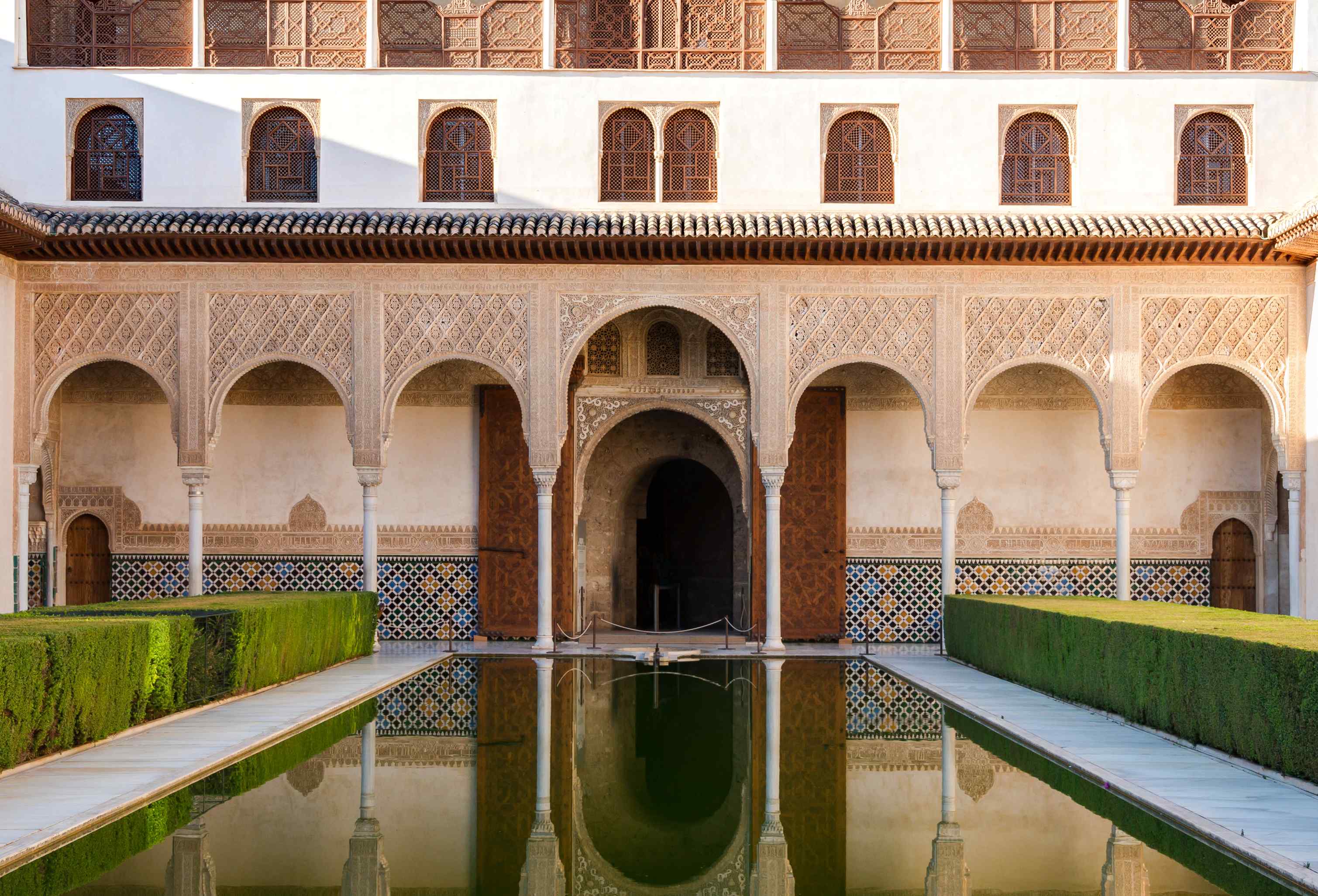
The Patio de los Arrayanes is a long rectangular courtyard measuring approximately 36 metres in length and 24 metres in width. The dominant feature is the rectangular pool that runs the full length of the space, fed from the north and emptying to the south. On either side of the pool stand porticoes: the north and south porticos consist of carved stucco arches supported by marble columns, creating deep colonnaded galleries that provide shade and shelter. The rhythm of the columns, the proportions of the courtyard relative to the height of the surrounding palace walls, and the plane of the water surface create a space of geometric perfection. Every surface and sightline was calculated to frame specific views and create a sense of undisturbed calm.
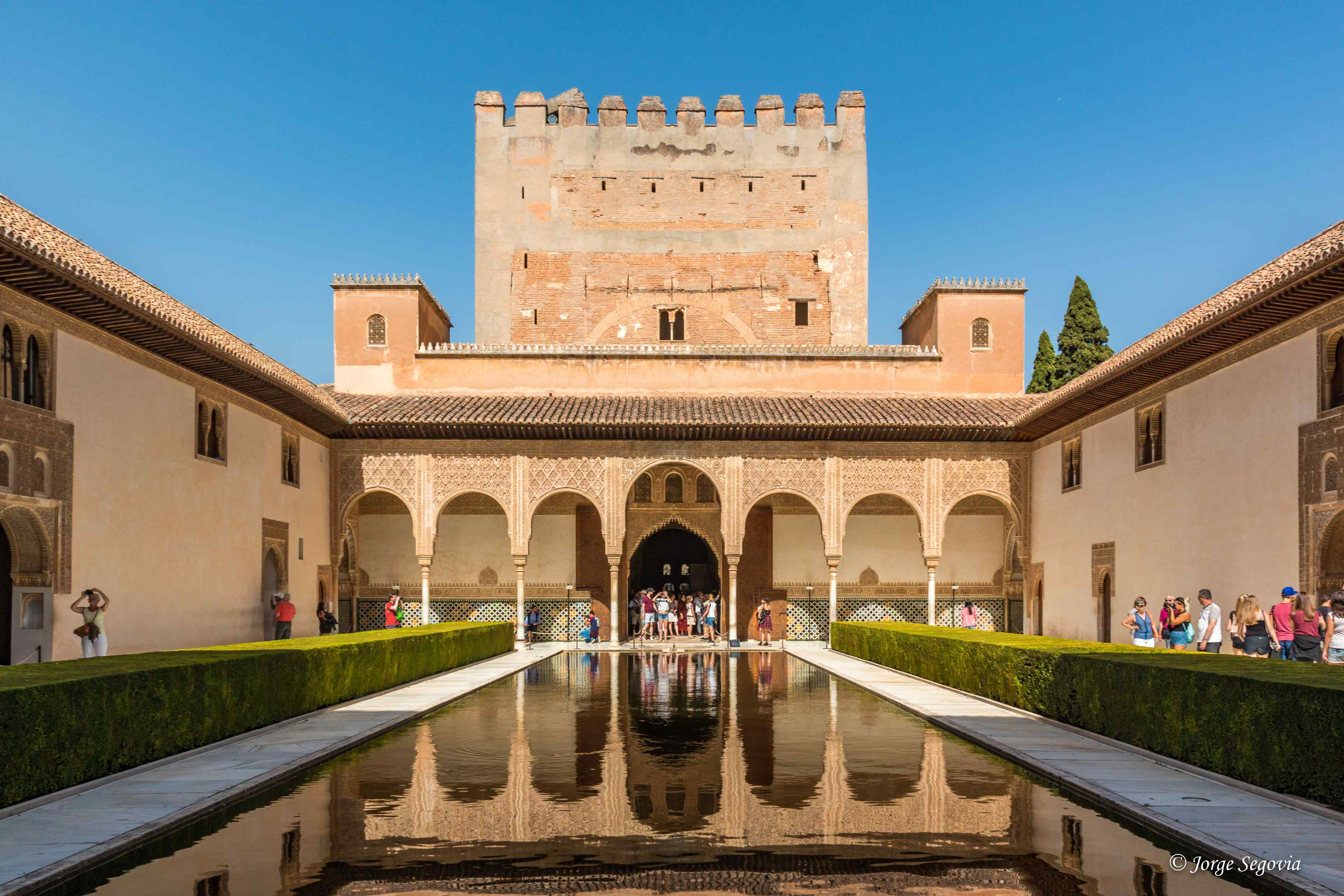
Patio de los Arrayanes courtyard with reflecting pool and colonnaded porticos, Nasrid Palaces Alhambra
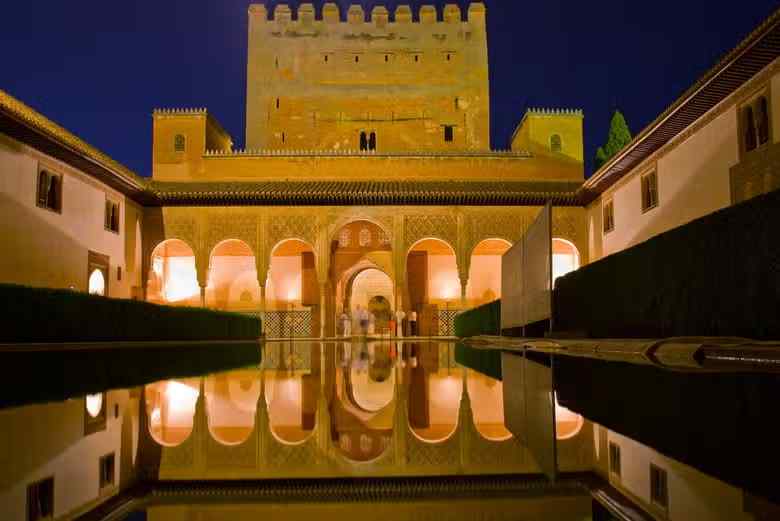
Reflecting pool in the Patio de los Arrayanes with myrtle hedges and palace archways, Alhambra Granada
02

2. The Reflecting Pool

The pool is approximately 34 metres long and 7 metres wide, its depth modest by design to ensure the surface remains still and clear. The water moves gently rather than turbulently, a technical achievement that required careful control of the inlet and outlet systems. In Islamic garden tradition, water serves both practical and symbolic functions: it provides coolness and humidity in a dry climate, but also represents life, purity, and continuity. The reflecting surface transforms the courtyard into two realms — the physical space above and the inverted mirror below. A visitor standing at one end sees the colonnade doubled, the sky duplicated, the Comares Tower reflected in full. This doubling effect was intentional and central to the Nasrid vision of harmonious space.

03

3. Comares Tower and Its Reflection

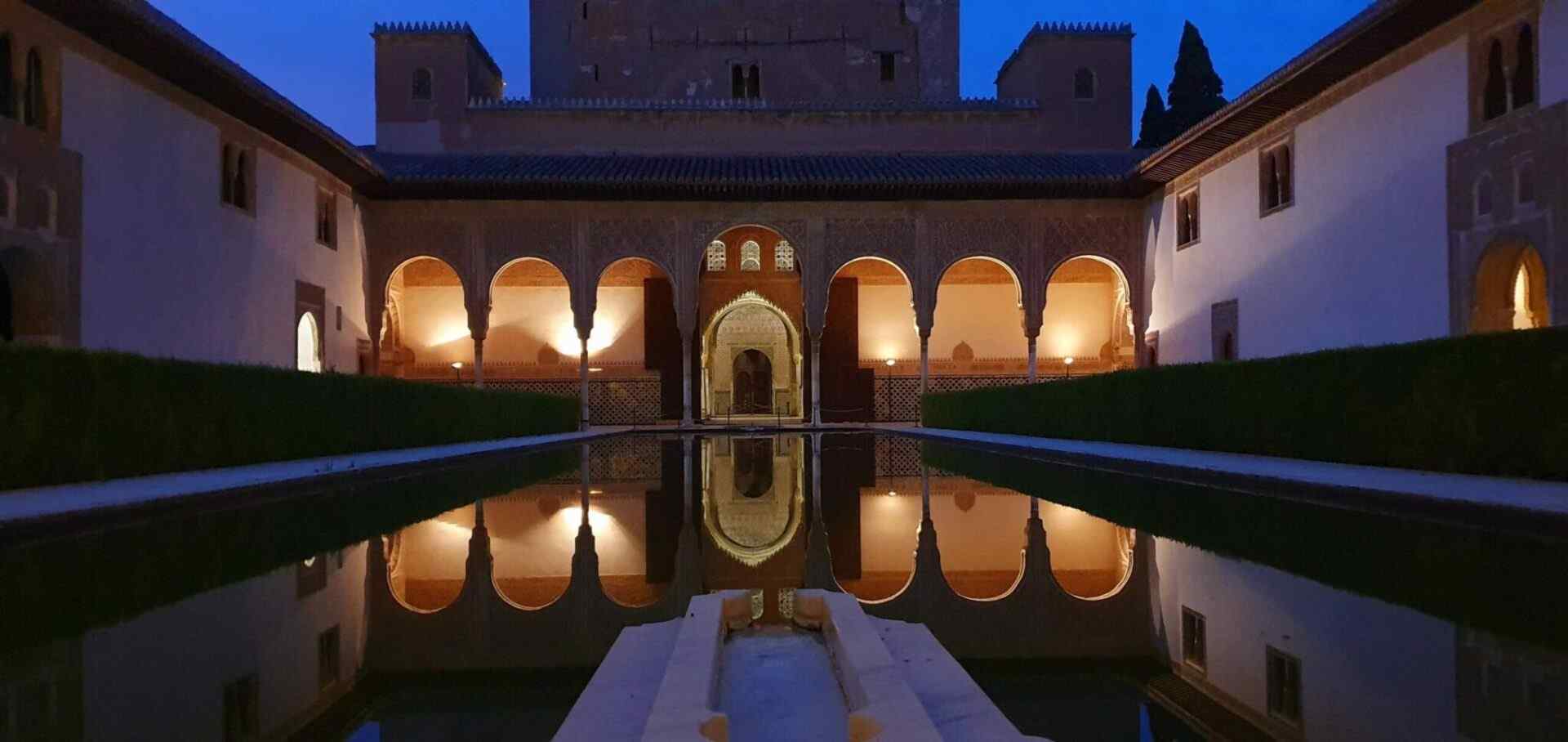
The Comares Tower (Torre de Comares) rises 45 metres above the palace, visible from the Patio de los Arrayanes primarily from the southern end of the courtyard. The tower was the most important and symbolic structure in the palace — the seat of the Sultan during the 14th century, and the location of the throne room. The reflection of this tower in the still water creates one of the most photographed views of the Alhambra. From the southern edge of the pool, the tower appears to be suspended upside-down in the water, its massive square form and crenellated crown perfectly mirrored. This reflection was not accidental; it was a deliberate compositional strategy. The Nasrid architects understood optics and designed the courtyard so that certain vantage points would produce maximum visual impact.
Comares Tower reflected perfectly in the still water of the Patio de los Arrayanes, Nasrid Palaces
Terraza 6 · Realejo, Granada

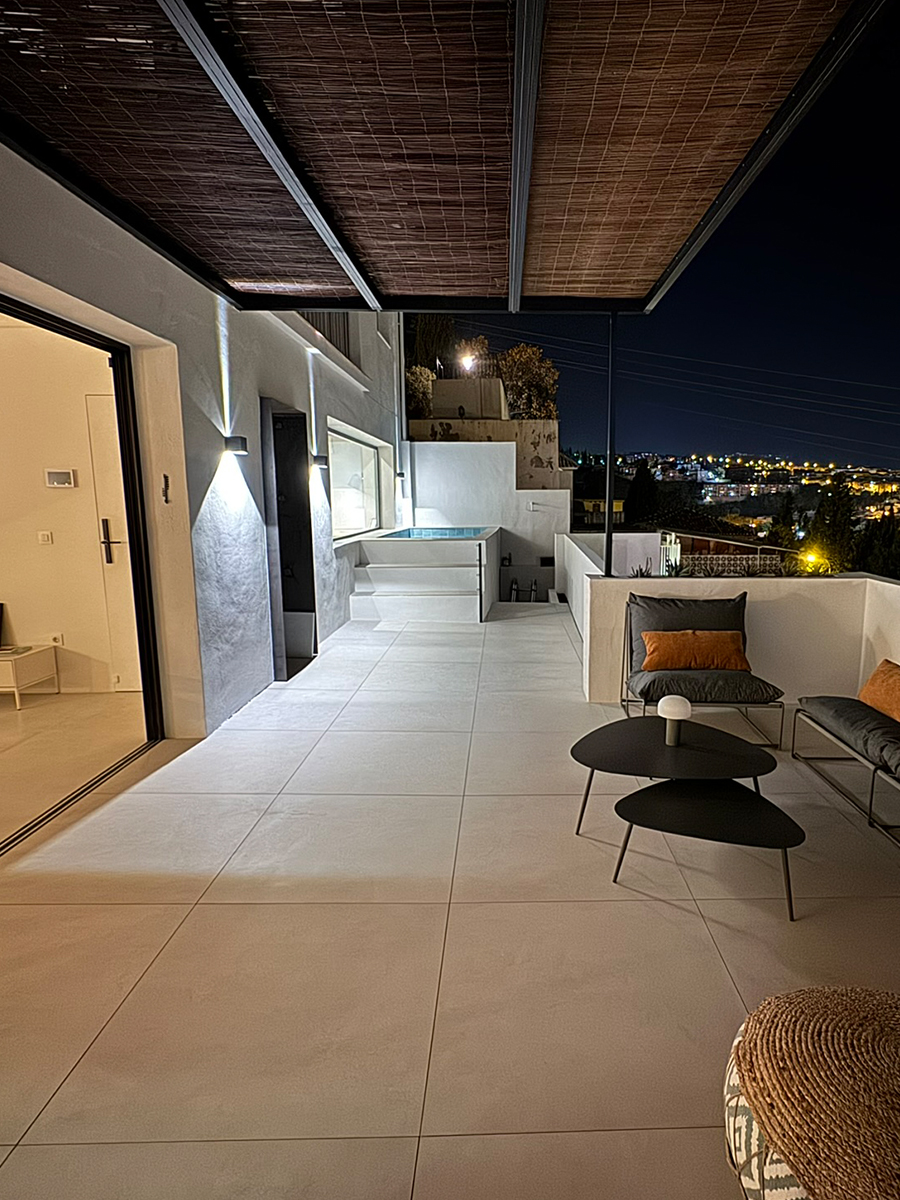
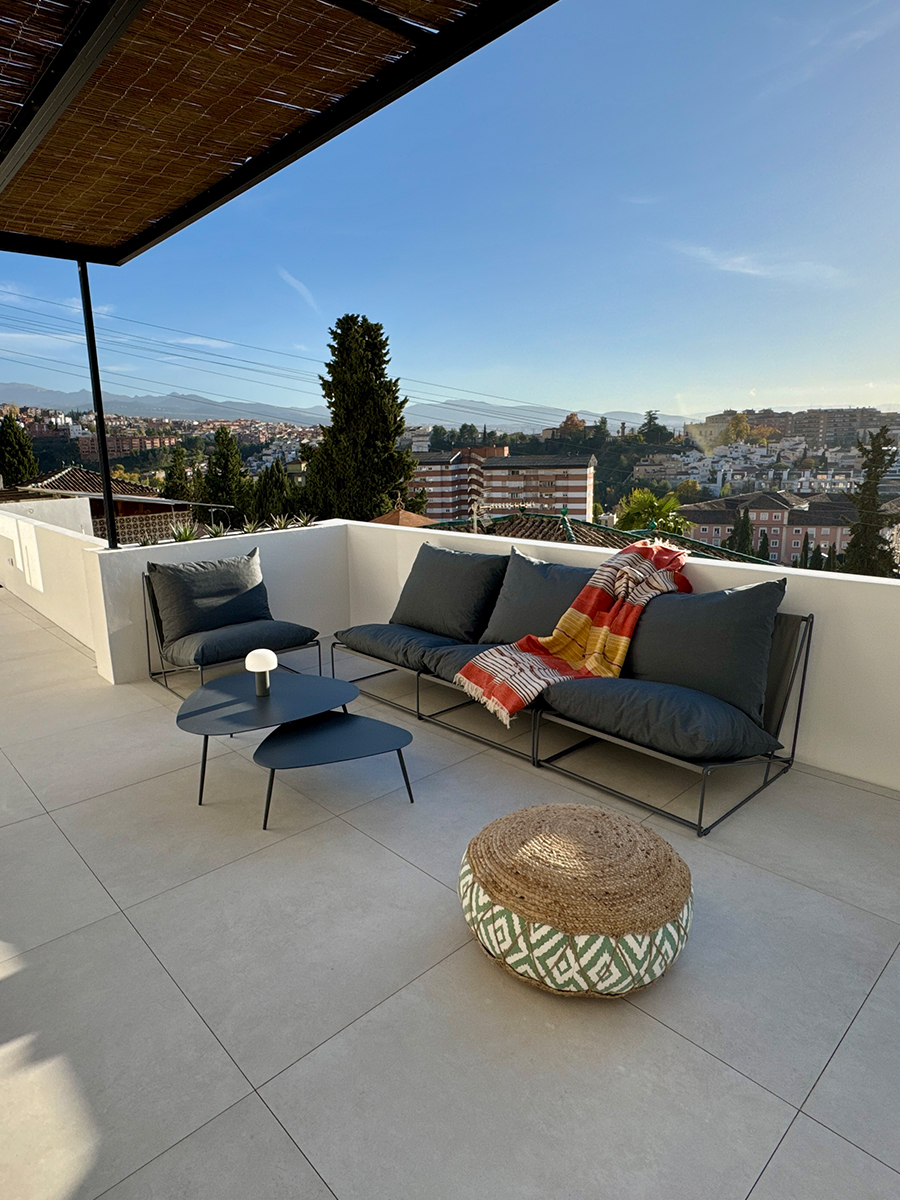
Terraza 6 is a private apartment in Realejo, about 900 m from the Alhambra entrance. Features a private pool, panoramic terrace, and free parking — perfect for a base to explore the Alhambra and Granada.

Check Availability
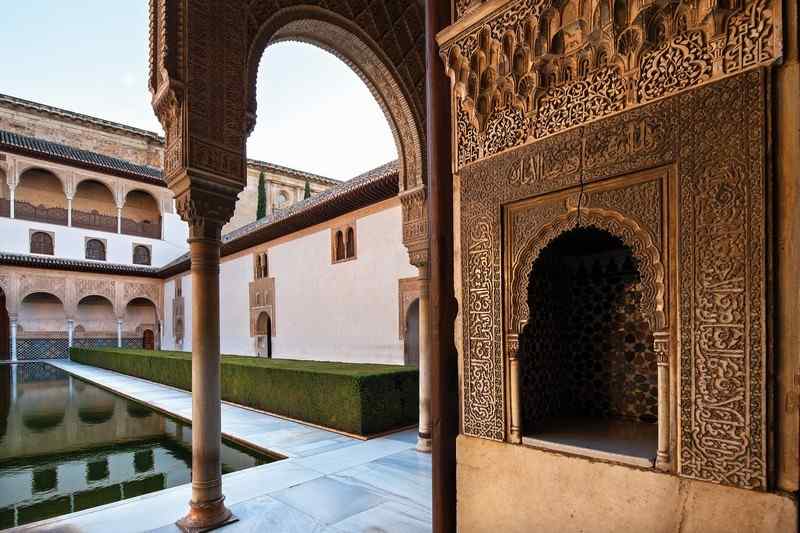
Myrtle hedges (arrayanes) framing the reflecting pool in the Patio de los Arrayanes, Alhambra
04

4. The Myrtle Hedges

The myrtle (arrayán) hedges flanking the pool serve multiple purposes in the design scheme. Botanically, the myrtle is a Mediterranean shrub with dark green leaves and small white flowers; its fragrance is subtle but distinctive, often described as slightly citrus and floral. In Islamic tradition, myrtle represents virtue and fertility, making it symbolically appropriate for a royal palace. Functionally, the hedges create a visual boundary that frames the pool and separates it from the portico colonnades, while also providing a textural contrast to the hard edges of stone and water. The hedges are trimmed and maintained to form low walls that do not obscure the view of the water or the reflections; they are decorative and symbolic rather than purely utilitarian. Walking past the myrtle in the stillness of the patio, a visitor would have experienced the full sensory environment that the Nasrids designed.

05

5. The Colonnaded Porticos

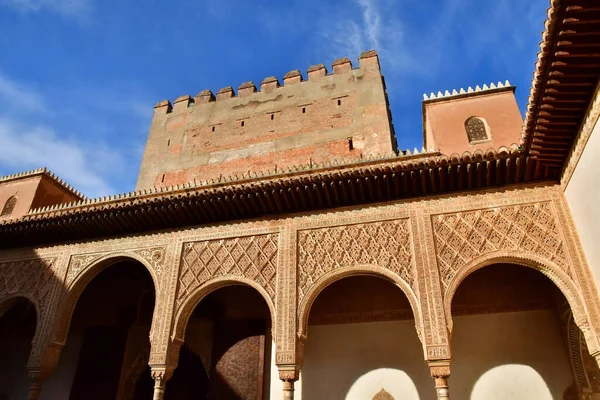
The north and south porticos of the Patio de los Arrayanes showcase the refined decorative vocabulary of late Nasrid architecture at its peak. The columns supporting the porticos are made of marble, many of them recycled from Roman and earlier Islamic structures — a common practice in medieval Spanish architecture. Above the columns rise elegant stucco arches with intricate arabesques, calligraphy, and geometric patterning. The eastern and western sides of the courtyard are closed by palace walls with windows and doors, carved in the same stucco language. The east portico in particular was important ceremonially: this was the space through which official visitors and dignitaries would have moved when approaching the throne room in the Comares Tower. The stucco decoration carries both decorative and didactic content — Koranic verses and poetic inscriptions appear throughout the carved plaster, invisible to a casual glance but present for those who read Arabic.

Marble columns and carved stucco arches in the portico of the Patio de los Arrayanes, Nasrid Palaces
Visitors exploring the Patio de los Arrayanes under the colonnade of the Comares Palace, Alhambra
06

6. Photography and Visiting Practicalities

The Patio de los Arrayanes offers some of the most compelling photographic opportunities in the Alhambra, which is one reason it can become crowded during peak hours. Early morning light — before 10 a.m. — is generally ideal for capturing the reflected tower without harsh shadows or haze. The pool surface is calmest in the early hours, when fewer people are walking the perimeter. If you visit in the afternoon, the light from the west can create dramatic side-lighting on the columns and arches, but the reflection will be less distinct due to afternoon heat rising off the pavement and slightly stirring the water. The patio receives its timed entry slot as part of the Nasrid Palaces ticket; you cannot visit it outside your designated time. Allow at least 20-30 minutes to move through the courtyard carefully and take in the space — more if you wish to return for different light angles.

Questions & Answers

Patio de los Arrayanes – FAQ

To stand at the Patio de los Arrayanes is to encounter the Nasrid architectural vision at its most refined. The courtyard obeys the Islamic garden typology that separates public from private, heat from water, light from shade — but here, in this palace courtyard, every element is controlled, measured, and placed to create a single dominant impression: the interplay of water, reflection, and stone. The courtyard was conceived as the visual and ceremonial heart of the palace, and it still functions that way today.

Arrayán is the Spanish word for myrtle, an aromatic Mediterranean shrub that has lined both sides of the central pool since the Nasrid period. The myrtle was valued in Islamic gardens for its fragrance, symbolic meaning, and for the textural contrast it provides to stone and water. The courtyard is named after this distinctive planting scheme.

Yes. The Patio de los Arrayanes is at the heart of the Comares Palace, which is part of the Nasrid Palaces. All visits to the Nasrid Palaces must be within a timed entry slot (typically 1 hour long). You cannot visit the patio outside your designated time window. The courtyard is the central hub of the palace complex, and you will pass through it multiple times when exploring the palace sections.

Early morning, ideally between 8:30 and 10:00 a.m., provides the best conditions. At this time the pool surface is calmest, fewer visitors are present, and the light from the east creates sharp reflections without harsh shadows. The water clarity is best before the day warms and before crowds begin walking around the perimeter. If you have a later time slot, you can still capture the tower reflection, but afternoon light may be less ideal and the courtyard busier.

The Comares Tower (Torre de Comares) is a 45-metre-high structure that rises above the Patio de los Arrayanes. Built in the 14th century, it housed the throne room and private quarters of the Nasrid sultans. The tower is the most prominent architectural element visible from the courtyard and its reflection in the pool creates the iconic image associated with the patio. The tower is not open to public access, but its presence and reflection dominate the visual experience of the patio.

Budget a minimum of 20–30 minutes to explore the courtyard carefully, examine the architectural details, and absorb the sensory experience. If you want to move through the entire Nasrid Palaces comprehensively, the patio will occupy part of your timed entry hour; most visitors spend additional time here due to its iconic status and photographic appeal. Allow longer if you plan to return to the same vantage point as light conditions change.

Yes. A continuous path runs around the perimeter of the Patio de los Arrayanes, passing through the north and south porticos. Visitors can freely walk from the north end to the south end, viewing the space from multiple vantage points and experiencing how the light and reflections change depending on where you stand. The path is clearly marked and accessible; there are no barriers in the way of exploring the full courtyard.

Terraza 6

Staying Near the Alhambra?

Terraza 6 is a private apartment in Realejo, about 900 m from the Alhambra entrance. Features a private pool, panoramic terrace, and free parking — perfect for a base to explore the Alhambra and Granada.

No booking fees. Direct contact with the owners.
Terraza 6 Luxury Apartment

A Genuinely Special Place to Stay in Granada

Terraza 6 is a luxury apartment in Granada with a private pool, a spacious terrace with panoramic city views, and every comfort you'd want during a stay in Andalusia. It's designed for people who want more than a standard rental — somewhere with real character, thoughtful details, and a direct link to one of Spain's most remarkable cities.

The Alhambra, the Albaicín, and some of the best tapas bars in the country are all within easy reach. We know Granada well and share everything we've learned with every guest — from the most useful practical tips to the places most visitors never find.

Booking direct means you deal with us personally. We're easy to reach and happy to help before, during, and after your trip.

Discover Apartment