1. The Mexuar
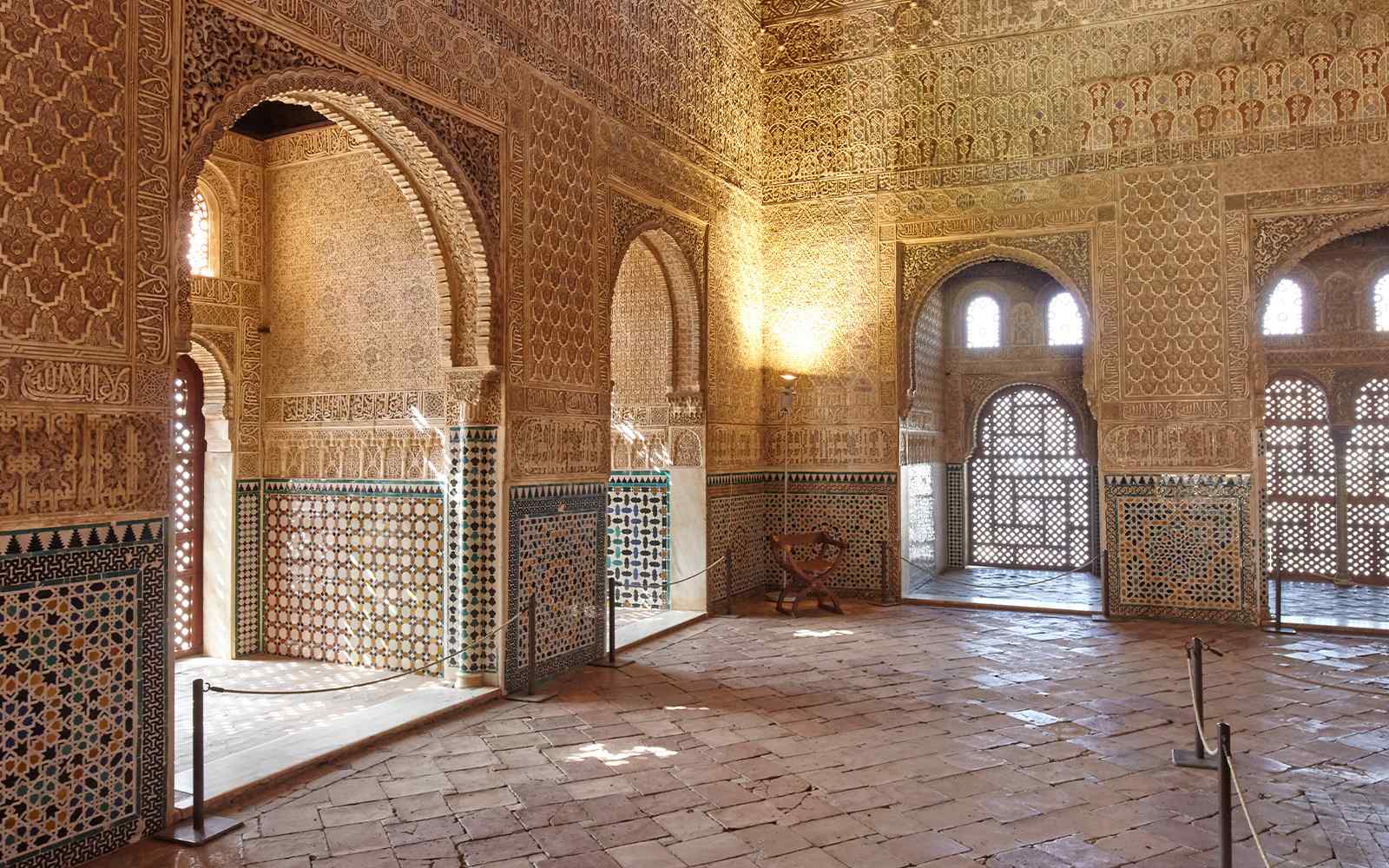
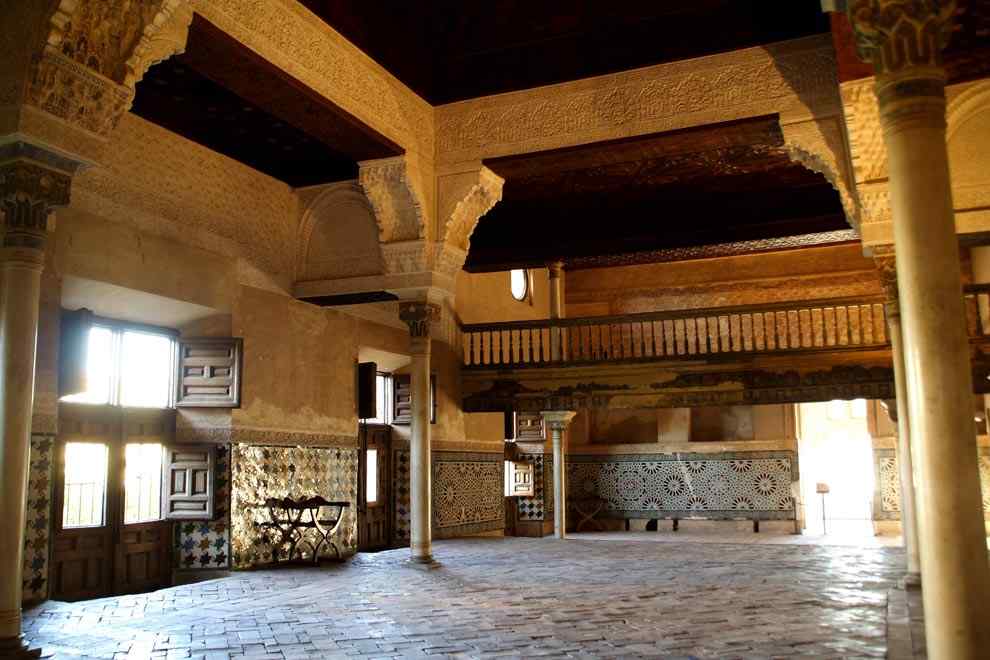
The Mexuar is where visitors to the palaces typically enter — the ceremonial reception chamber where official business began. Its name derives from the Arabic word for "consultation" or "counsel," reflecting its function as the entry point for administrators and dignitaries. The room is notable for its ornate wooden carved ceiling, geometric wall tilework, and careful proportions that amplify sound subtly — allowing the ruler to be heard without shouting across the chamber. The elaborate stucco work and zellige (geometric tile) patterns here set the tone for everything that follows. Look up: the ceiling is a masterwork of three-dimensional carved wood. The Mexuar opens onto a small garden court, and from here the route leads deeper into the more private quarters of the palace. For its modest size, it contains an extraordinary density of craftsmanship.
2. Comares Palace
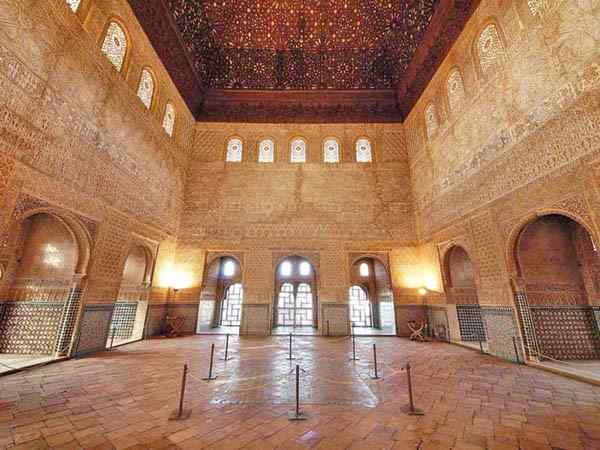
Comares Palace surrounds the Patio de los Arrayanes and culminates in the Hall of the Ambassadors — the most public and formal space in the entire palace complex. The term "Comares" likely derives from the word for chamber or room, though its exact origin is debated. What is certain is that this palace was the site of official state business: treaties were signed here, ambassadors received formal audience, and the sultan held court. The architecture reflects this public function — spaces are more formally arranged than in the private Palace of the Lions, and the decorative schemes emphasize power and permanence. The northern and southern colonnades of the Patio de los Arrayanes remain among the finest examples of Gothic-influenced Islamic architecture, blending the geometric precision of Islamic design with the pointed arch proportions influenced by contemporary European styles.
3. Patio de los Arrayanes
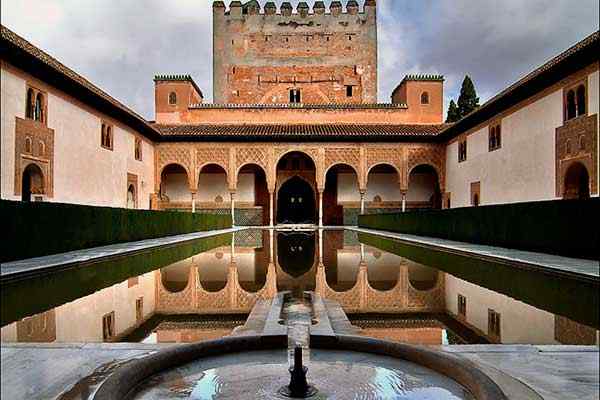
The Patio de los Arrayanes — Court of the Myrtles — is perhaps the single most iconic space in the Nasrid Palaces. A long rectangular courtyard with a reflecting pool at its center, surrounded by colonnades on the north and south, it exemplifies the Nasrid understanding of how to use water, light, and proportion together. The myrtles planted along the long edges of the pool give the courtyard its name and their dark foliage frames the reflection perfectly. The pool itself is not merely decorative: it was part of the palace's water management system, fed by carefully engineered channels. Architecturally, the courtyard is a study in framing and perspective — the Hall of the Ambassadors is visible at the far end, its facade appearing to float above the water. Walking the colonnades or sitting courtside, the optical effects are deliberate and powerful. The courtyard is exposed to sky, making it feel simultaneously intimate and grand.