
Granada's centre is compact and dense with history — most of the major landmarks are within a ten-minute walk of each other, clustered around the Cathedral and the Capilla Real. The Cathedral, begun in 1523, is one of the largest in Spain and the first built in the Renaissance style after the Christian reconquest. Immediately next to it is the Capilla Real, completed in 1517 as the mausoleum of Ferdinand and Isabella — the monarchs who unified Spain and commissioned Columbus's voyages.
The Alcaicería, the former Moorish silk market, runs alongside the Cathedral as a narrow lane of craft shops. Plaza Bib Rambla, just around the corner, is the main outdoor square in the centre. Plaza Nueva at the foot of the hill is the practical hub of the city — the start of the walk up to the Alhambra and the point where the main routes diverge. From the Realejo, the city centre is about a ten-minute walk.
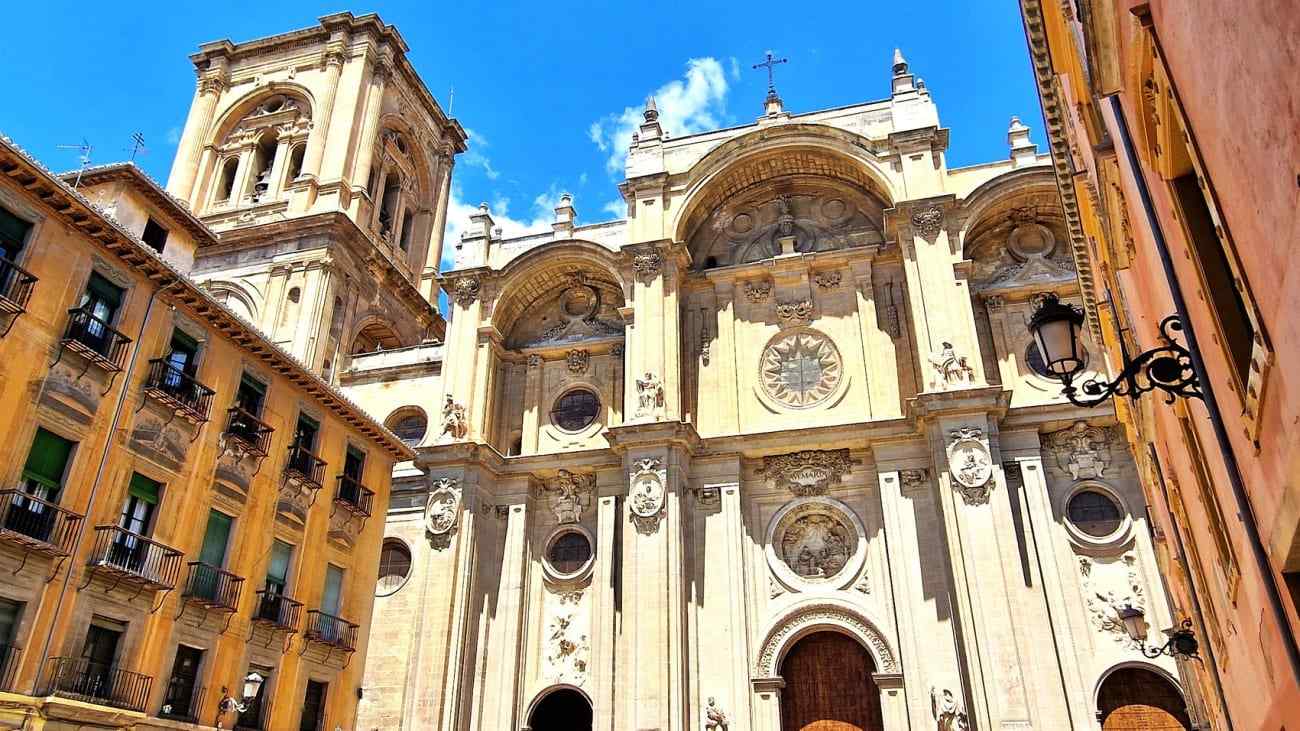
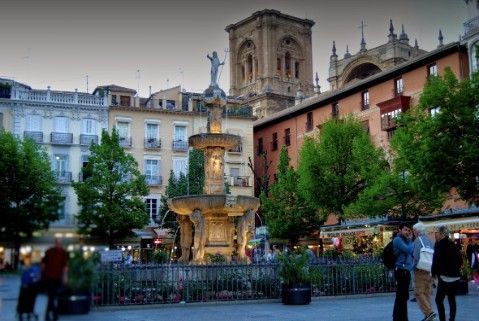

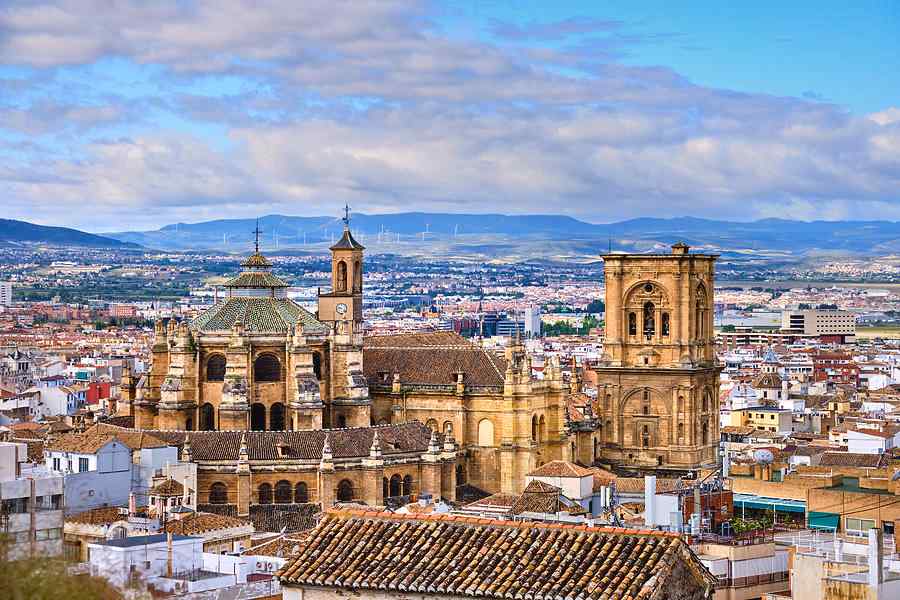
Construction began in 1523 on the site of the former main mosque, and the result is one of the finest Renaissance buildings in Spain. Diego de Siloé designed the circular chapel behind the main altar — an unusual piece of architecture that draws scholars as well as visitors. The interior is large and relatively uncluttered, which makes the scale easier to read than in many Spanish cathedrals. Plan around 45 minutes.
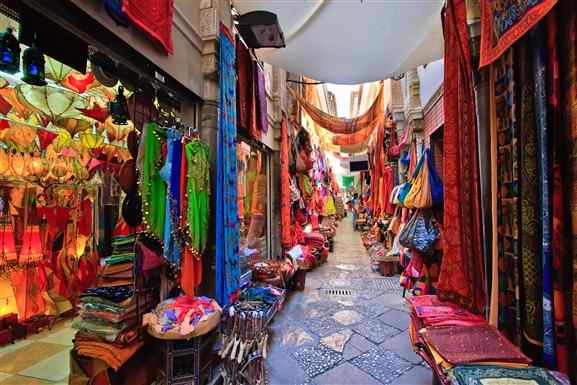
The Alcaiceria was the Nasrid-era silk market — one of the most important in Moorish Spain, where silk, spices, and precious goods were traded under strict guild rules. It burned down in 1843 and was rebuilt in a romanticised Moorish style, so what you see now is a 19th-century reconstruction. The narrow lanes are still worth a walk: ceramics painted in the traditional Granada blue and green, leather goods, spices, tea, and the usual souvenir range, all in a suitably atmospheric setting a few steps from the Cathedral. Prices here are higher than elsewhere in the city, but the location and the setting make it worth browsing. The lanes connect through to Plaza Bib Rambla on the south side.
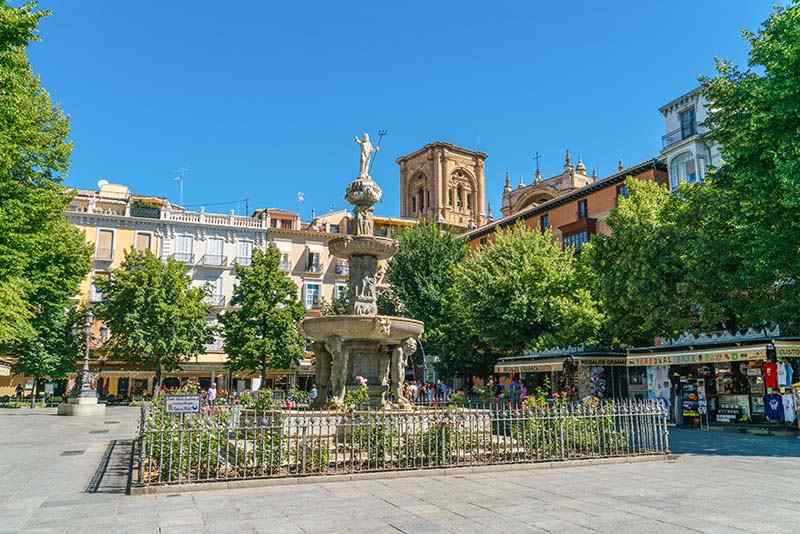
The large square just behind the Cathedral, and the most relaxed place to sit in the centre. A flower market operates here most mornings — stalls selling cut flowers, potted plants, and herbs arranged around the central fountain. The surrounding cafe terraces fill up from mid-morning onwards. In the evening, families bring children to the square and the pace slows considerably. The heladeria on the south side has been operating for decades and serves some of the better ice cream in the centre. A natural stopping point between the Cathedral and the Capilla Real, both within two minutes' walk.
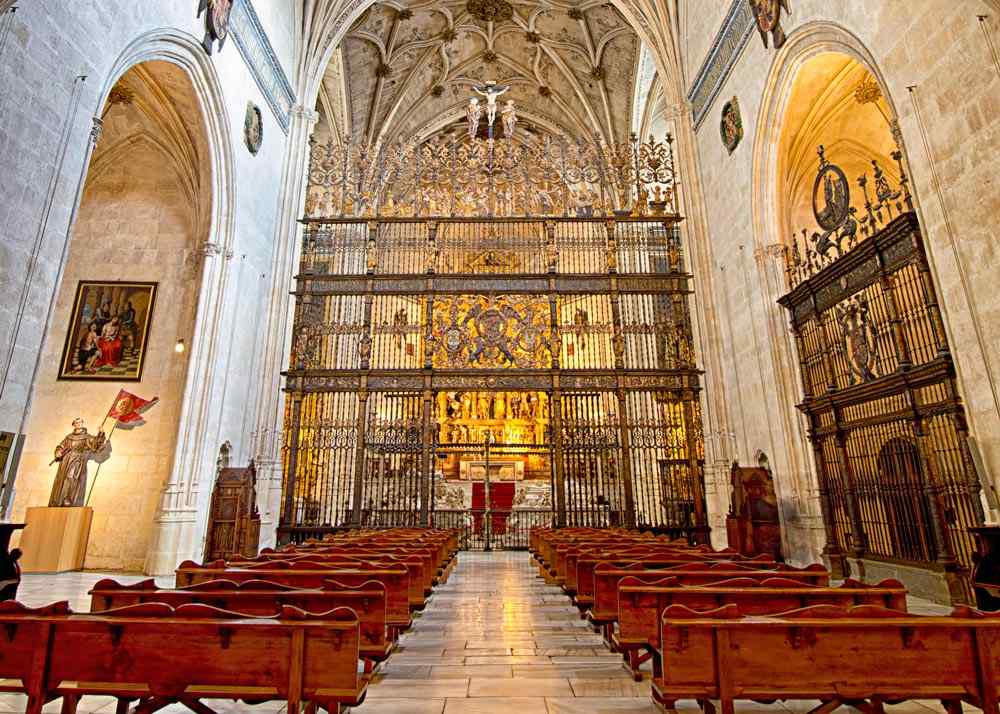
Completed in 1517 and attached to the Cathedral, the Capilla Real is the mausoleum of Ferdinand and Isabella — the monarchs who commissioned Columbus, completed the Reconquista, and chose Granada as their burial place. Their carved marble tombs are the centrepiece, and the sacristy holds a remarkable collection of Flemish paintings from Isabella's personal art collection. One of the most historically loaded rooms in Spain.
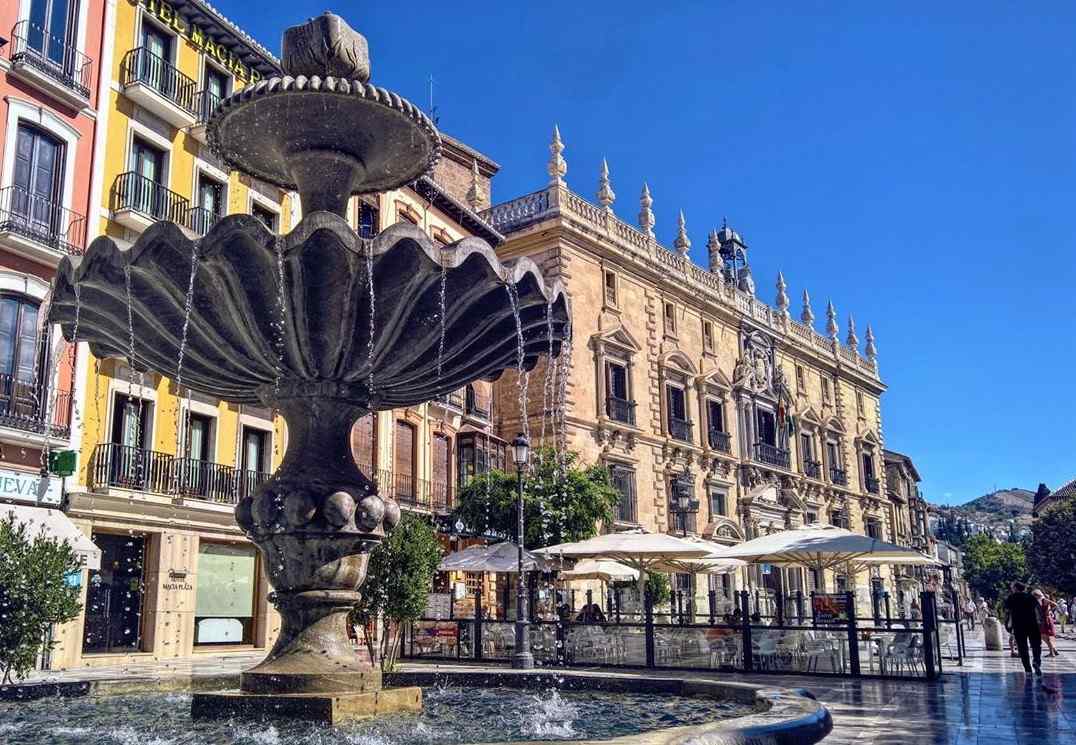
The practical centre of Granada — the square at the foot of the hill where the Darro river runs underground and the main routes diverge: up to the Alhambra via Cuesta de Gómez, into the Albaicín via Carrera del Darro, or into the shopping streets of the centre. The Real Chancillería (16th-century royal court building) occupies one side. The most useful single reference point in the city.
A private apartment in Realejo — a 10-minute walk from the city centre, 900 m from the Alhambra, with a private pool, panoramic terrace, and direct booking.
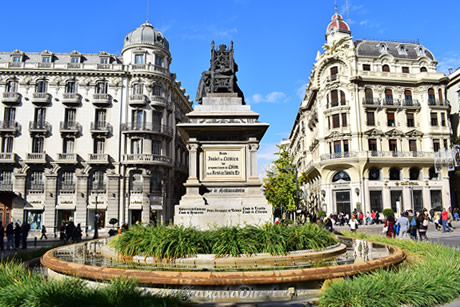
A small square connecting Gran Via de Colon with the route towards Plaza Nueva, dominated by a 19th-century bronze monument showing Columbus presenting his New World maps to Queen Isabella. The scene depicted actually took place in Granada — at the Alhambra in 1492 — making this historically appropriate rather than merely decorative. The square sits at a practical junction: from here you can walk east to Plaza Nueva in three minutes, south towards the Cathedral in two, or north along Gran Via for shopping. The Corte Ingles department store is a block north if you need practical supplies. A reliable landmark for orienting yourself in the centre.
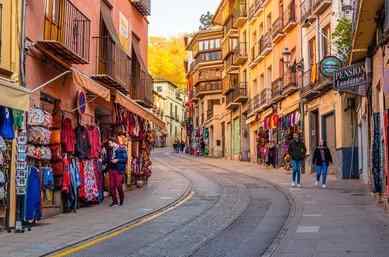
The steep pedestrian street leading from Plaza Nueva up to the Alhambra entrance — the most direct walking route and the one locals use. The lower section is lined with guitar workshops where luthiers still build classical and flamenco guitars by hand, and souvenir shops selling ceramics and Alhambra reproductions. As you climb, the commercial stretch gives way to the shaded woods of the Alhambra hill. The gradient is noticeable but not punishing. Plan 15 to 20 minutes from Plaza Nueva to the ticket office at a comfortable pace. Wear solid shoes — the cobbles are old and uneven in places. There are no cafes on the climb, so bring water in summer.
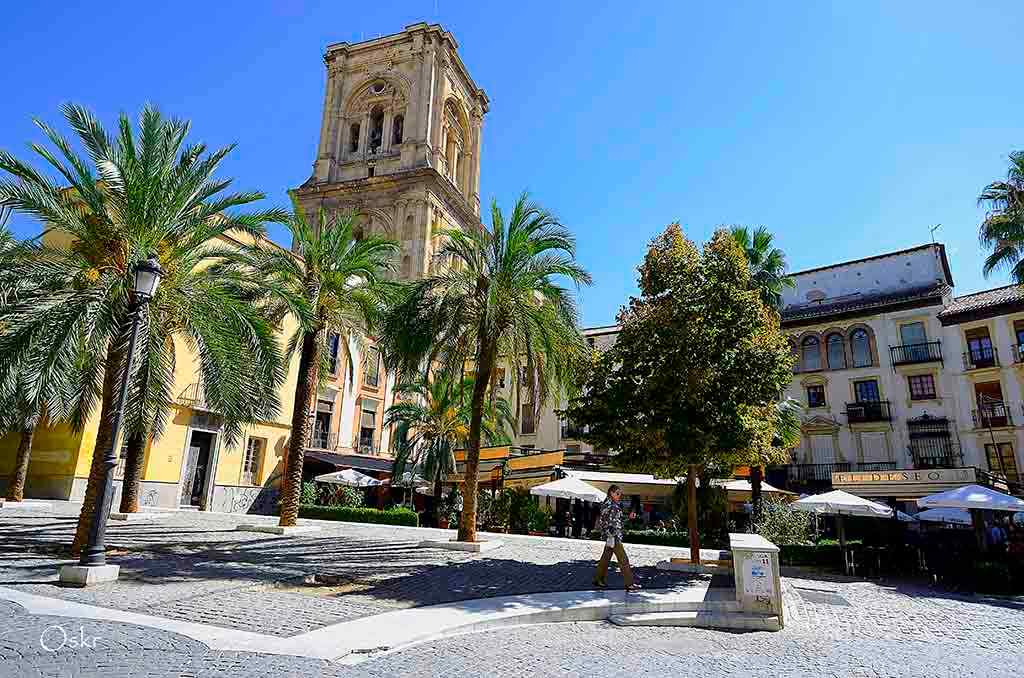
A quiet square on the north side of the Cathedral, overlooked by the Palacio de Bibataubin — a building that looks 16th-century but is actually a 1930s reconstruction now used as the provincial government offices. The square functions as a useful shortcut between Gran Via and the Cathedral, and occasionally hosts outdoor art exhibitions and book fairs. It is noticeably less visited than the squares on the south side, which makes it a good place to sit with a coffee away from the crowds. A small kiosk on the north end serves drinks, and there are benches under mature trees. Worth knowing about if Plaza Bib Rambla is packed.
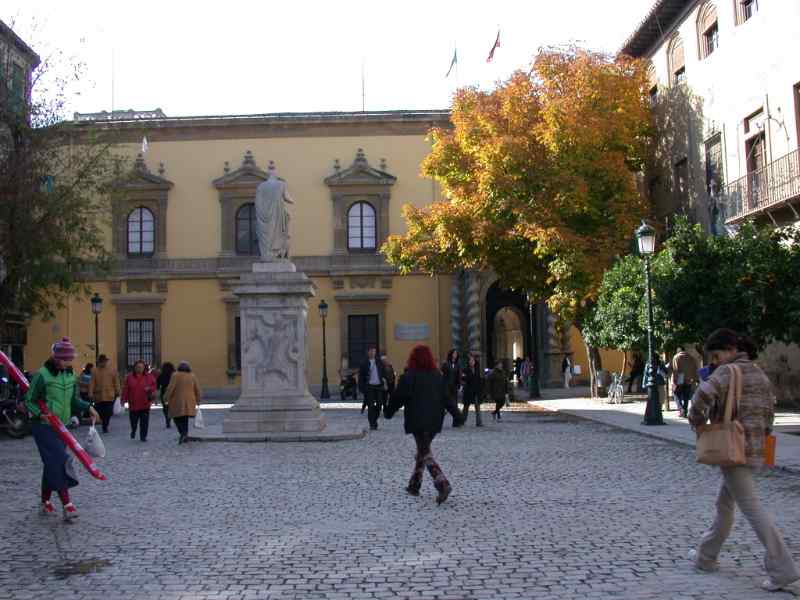
The square in front of Granada's historic Law Faculty building, one of the oldest university faculties in Spain. The Baroque facade of the Iglesia de Santos Justo y Pastor (16th century) occupies one corner and is worth a quick look inside for its ornate altarpiece. On weekday mornings the square is busy with students; otherwise it offers a genuine sense of the city's non-tourist daily life. The bars on the surrounding streets serve cheap tapas aimed at students rather than tourists — portions are larger and prices lower than in the Cathedral area. A short walk from the centre, and a practical reminder that Granada is a working university city of 230,000 people, not just a tourist destination.
Best rate direct · No booking fees · Up to 4 guests · Private pool
Check Availability