
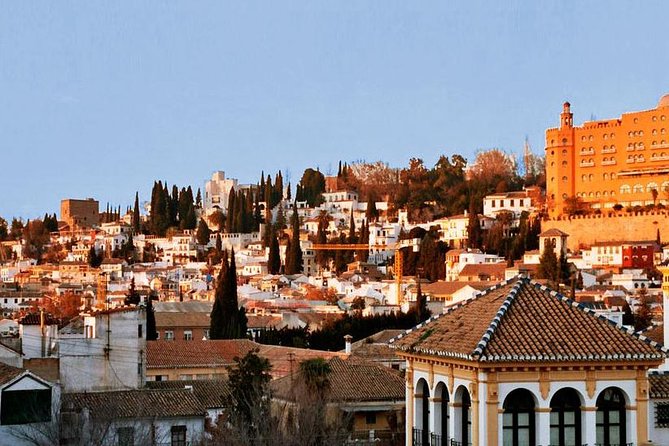
Realejo occupies the lower slopes of the Alhambra hill, south of the Cathedral, and was historically Granada's Jewish quarter (judería) until the expulsion of 1492. The neighbourhood spent several centuries in relative obscurity after that, which is partly why its street pattern and some of its older buildings survived intact. Today it's one of the more interesting parts of the city for walking — less trafficked than the Albaicín, with a mix of 16th-century architecture, university-age residents, and a concentrated collection of street murals by the Granada artist El Niño de las Pinturas.
The most significant historical landmark is the Casa de los Tiros — a 16th-century palace built immediately after the Reconquista, one of only a handful of buildings from that period still standing in the city. The Paseo del Salón and Paseo de la Bomba along the Río Genil mark the southern edge of the neighbourhood — decent riverside promenades, particularly in the early evening.
Terraza 6 is on the upper slope of the Realejo, which makes this the neighbourhood we know best — and the base from which everything in this guide is within easy walking distance.
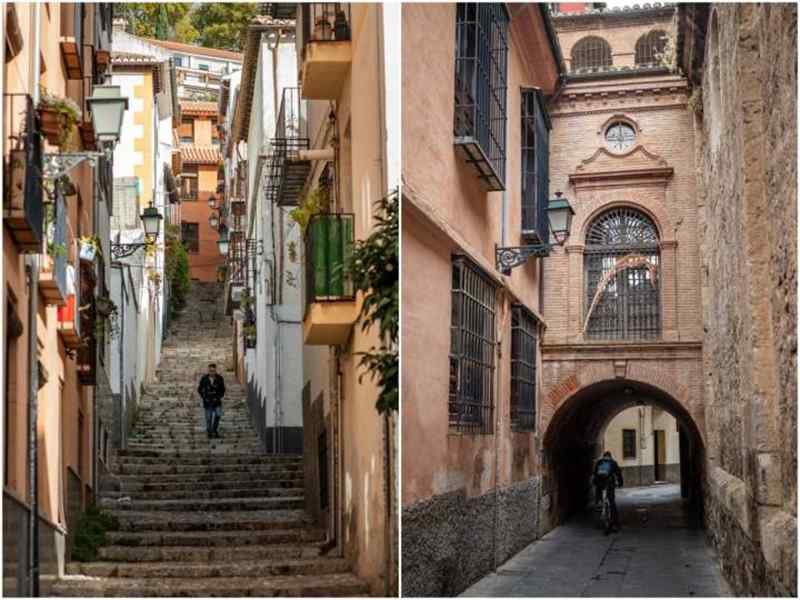
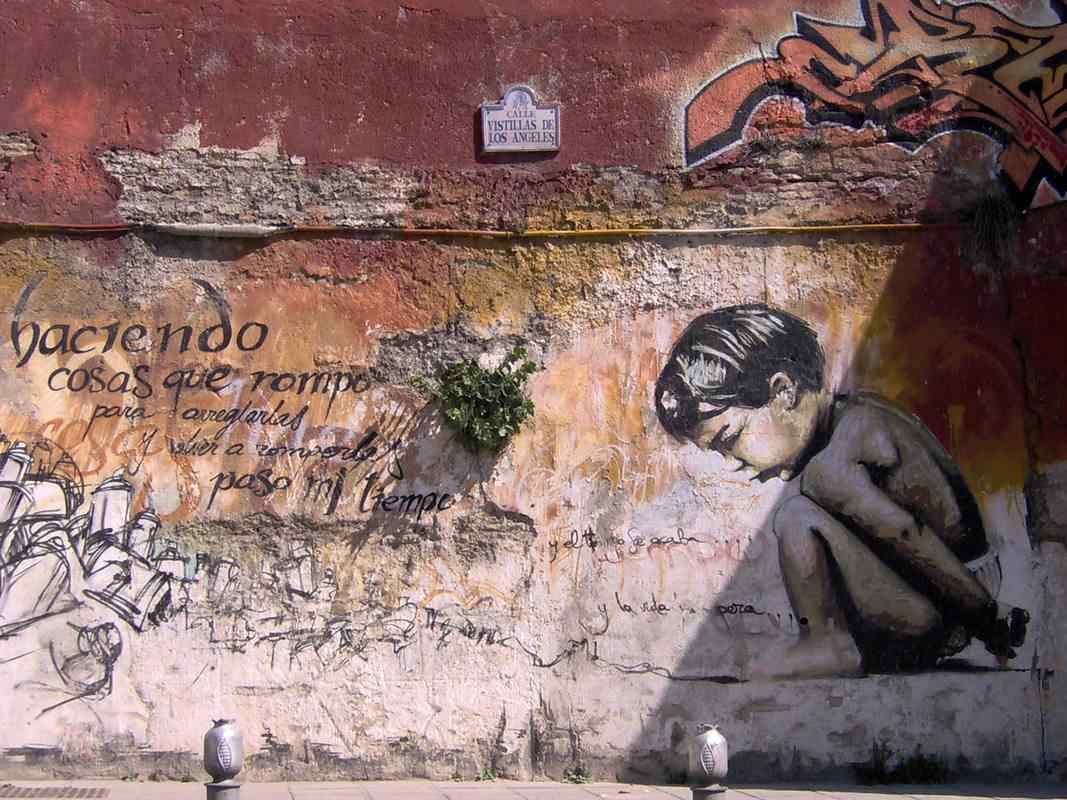
Raúl Ruiz — known as El Niño de las Pinturas — is Granada's most celebrated street artist and has covered much of the Realejo in large-scale murals over the past two decades. The work tends towards the figurative: faces, hands, birds, and mythological references, often with poetic text. The murals are on residential buildings throughout the neighbourhood and there is no official route — wander the streets between the Fuente de las Batallas and the Genil and see what you find.
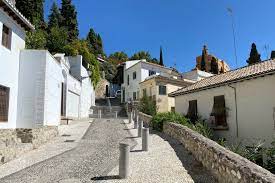
One of the most significant buildings in the Realejo: a 16th-century palace built by the Granadan nobility immediately after the Reconquista, and one of the very few examples of this transitional period of architecture still standing in the city. The unusual façade features carved figures holding muskets (tiros), which gave the building its name. The interior is now a museum focused on Granada's history, culture, and traditional crafts — worth an hour if the city's past interests you.
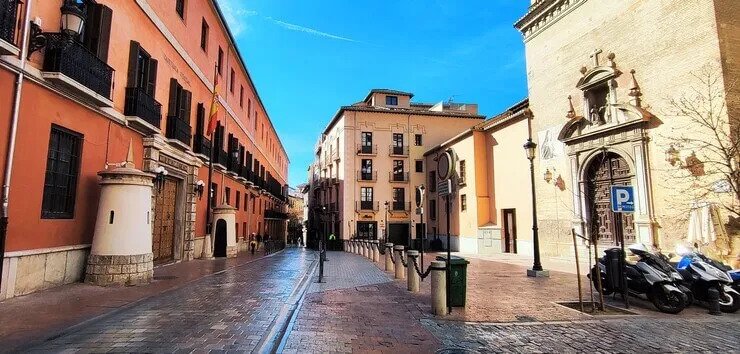
The main artery of the Realejo, running from the edge of the city centre down towards the Paseo del Salon. The 16th-century church of San Matias anchors a small square midway along — one of several churches built in this neighbourhood immediately after the Reconquista on the sites of former synagogues. The square around the church has a few tapas bars popular with locals, and the surrounding streets have some of the best-preserved 16th- and 17th-century residential facades in the neighbourhood. From here, look for El Nino de las Pinturas murals on the buildings to the south. A good starting point for a walk through the Realejo, and a natural place to stop for a drink before continuing downhill.
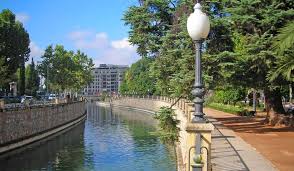
A tree-lined riverside promenade along the Rio Genil at the southern edge of the Realejo. Plane trees provide shade along the full length, and benches face the water at regular intervals. The promenade continues as the Paseo de la Bomba further east, and together they make for a quiet 20-minute walk away from the tourist crowds. On weekend mornings local families come here with children and dogs; on weekday afternoons it is one of the calmest places in the city. In spring the jacaranda trees bloom purple along sections of the path. There is a small playground at the eastern end. A genuinely local space where you can sit by the water and decompress after a day of sightseeing.
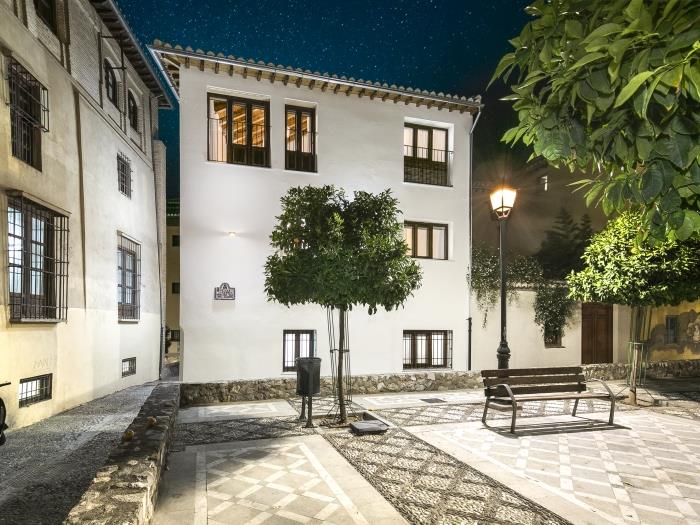
A private apartment in the Realejo — 900 m from the Alhambra, with a private pool, panoramic terrace, and direct booking.
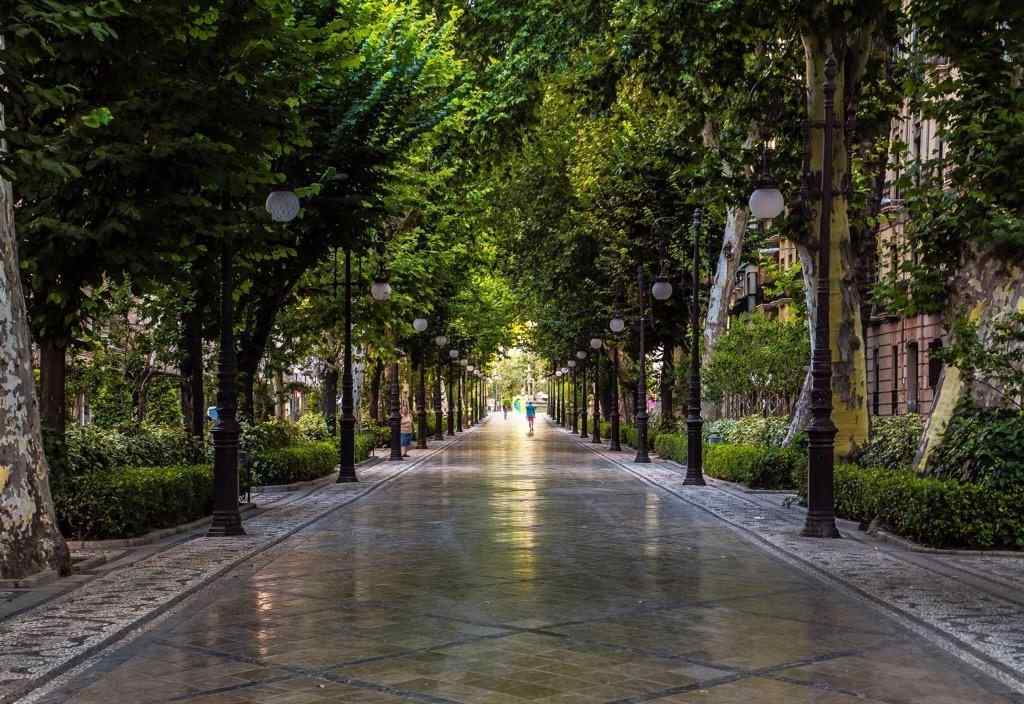
A wide boulevard running alongside the Genil from the Puente Verde bridge, lined with palm trees and cafe terraces. This is where Granada's outdoor terrace culture is at its most concentrated on warm evenings — a long row of bar and restaurant fronts facing the river, with tables spilling onto the wide pavement. The crowd here is noticeably more local than in the Cathedral area, and the tapas tend to be better value. Several of the restaurants serve full meals as well as drinks. On Friday and Saturday evenings the terraces stay busy until midnight. At the southern end, the Fuente de las Batallas fountain marks the junction with the Realejo's residential streets. A good place to eat outdoors without feeling like you are in the tourist quarter.
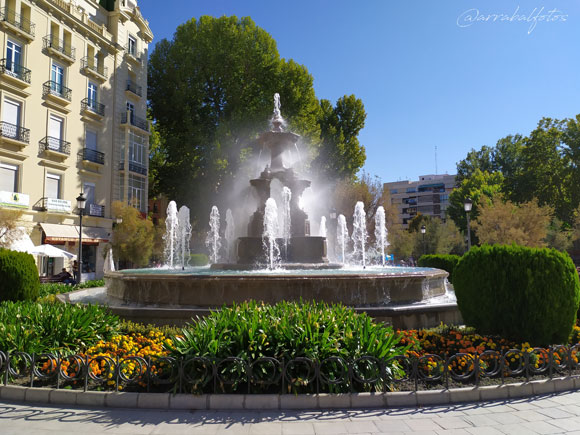
A 19th-century fountain and the informal heart of the Realejo, sitting at the junction of several of the neighbourhood's main streets. The fountain itself is modest — a tiered stone basin in a small roundabout — but this is where the Realejo's daily life converges. Locals sit on surrounding benches, children wait for school buses, and the bars on the corners fill up for afternoon drinks. It is also a useful orientation point: from here, Carrera de la Virgen runs south towards the Genil, Calle San Matias heads north towards the centre, and the streets climbing east lead up towards the Alhambra hill. If you are staying at Terraza 6, this is roughly a five-minute walk downhill.
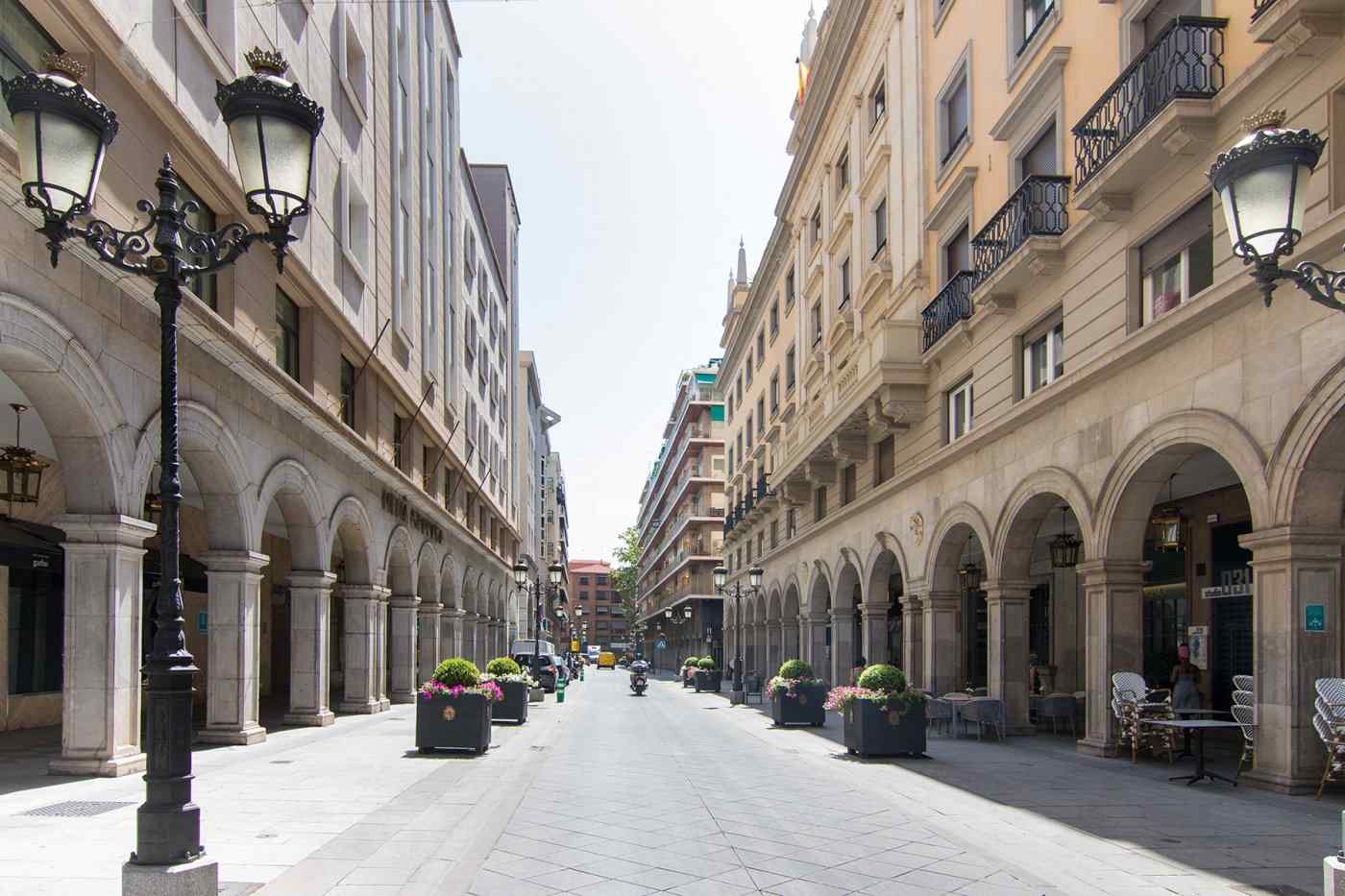
A partly pedestrianised street on the edge of the Realejo, connecting the commercial centre with the neighbourhood's quieter streets to the south. Named after the Granada writer Angel Ganivet, it has a practical mix of shops, pharmacies, bars, and older buildings with wrought-iron balconies. The street is busiest around lunchtime when office workers from the nearby Ayuntamiento head out for tapas. Several of the bars here are long-established and serve reliable food at local prices — not places that depend on tourist trade. Less picturesque than the historic lanes further up the hill, but a useful and authentic route between the centre and the Genil riverside. Look for the small bookshops near the southern end.
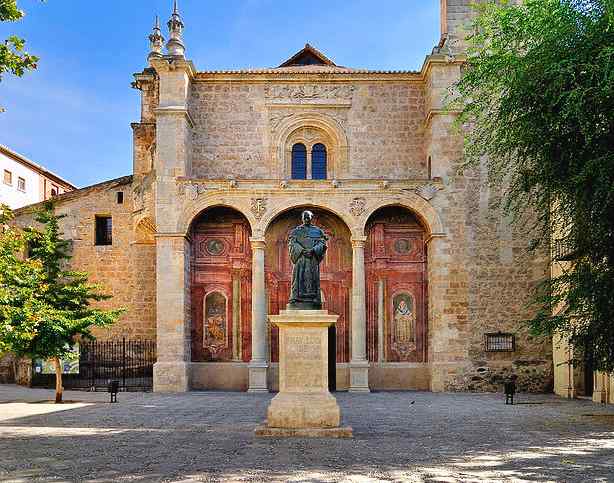
Commissioned by Ferdinand and Isabella in the early 16th century and among the first churches built in Granada after the Reconquista. The Dominican monastery attached to the church played a central role in the Inquisition in Granada — a less comfortable part of the city's history but a real one. The plaza in front is planted with orange trees and is one of the quieter squares in the centre, overlooked by most visitors focused on the Cathedral and Capilla Real. The interior has a substantial altarpiece and the scale is more human than the Cathedral, which makes it easier to appreciate the architecture. The Palacio de los Condes de Gabia on the opposite side of the square now hosts temporary art exhibitions and is worth checking.
Best rate direct · No booking fees · Up to 4 guests · Private pool
Check Availability